Writing: Fiction vs Reality

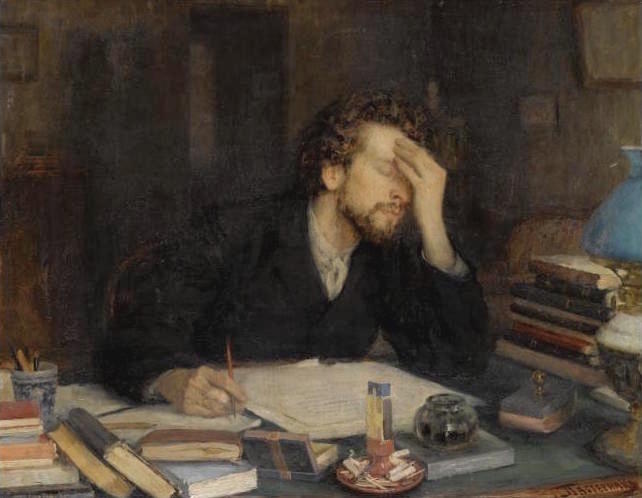
Writer_JohnThink of a writer at work, go on…What’s the first image that comes to mind? It might be a man or woman, more probably a man because on film and TV (contrary to reality) writers are almost always male – female writers are usually journalists or diarists, and they will be huddled over a typewriter furiously tearing away unwanted pages and throwing them in the bin until the manuscript arrives as a neat stack.

On their desk there may be the odd note and a bottle of whisky (or a hip flask stashed into the top drawer if drinking is meant to be their issue) and as their eyes look up they may alight upon a strategically placed framed picture alluding to some past (possibly tragic) event, a hunting or mountaineering photo or group shot with army buddies or maybe a long-lost love. Hank Moody meets Ernest Hemmingway.

Or if your point of reference isn’t TV and film – a strange thought I do concede – you might imagine someone younger and well-dressed tapping away at an expensive laptop in a trendy cafe, an enigmatic smile threatening to break out over their face as the inspiration starts to flow in between sips of their impeccably prepared (insert name of fancy type of) coffee.

Now I can’t and wouldn’t wish to speak for all writers but that doesn’t ring true of my experience. For one, as the previous paragraph no doubt revealed, I don’t even drink coffee. My workspace isn’t a lodge or a beachside retreat or the great outdoors where I pen things into my extensive journal; it’s my bedroom. When I look up from my screen, I see another screen because sometimes I need two and there is nothing neat about the arrangement of my notes because sometimes I need to look at several pages at once. My desk doesn’t so much scream ‘writer’ as ‘potential fire hazard’.

So here follows a few things that I have heard or seen about writing that simply don’t match my experience. That’s not to say they won’t for you, perhaps you’ve reached that magical place, but I suspect that many writers would have similar variations.

Typewriters

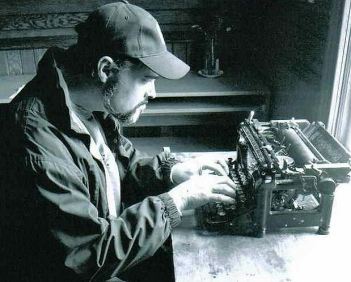
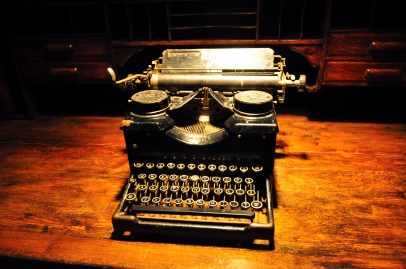
I, like most people, haven’t used a typewriter since the 1980s and then only as a novelty. They are not ‘more authentic’ they are hard work and, given that we can now word process on a computer, needlessly so. Quite literally, I don’t know any writers who insist on using a typewriter because why would you? I know lost and stolen manuscripts make for convenient drama; in the real world a lost manuscript would be utterly and completely heartbreaking for a writer and for very good reasons you try to avoid that being a possibility. When most writers lose work it doesn’t involve chasing dogs or tracking down your jilted lover, it is comprised of clicking on a file then letting out a long and very repetitive litany of swear words, possibly followed by tears.

Cafe culture

workplace-480222_960_720This may be a controversial one because I’m sure writers do frequent cafes and do write things down there. In my experience, however, cafes are far too busy, noisy and distracting to get deeply into a novel in those surroundings. Making notes? Doable. Writing a blog? Sure. Putting in the hard grind? I’m less convinced but I accept that others may be better at blocking out the distractions than me. Likewise, they may not be bothered by paying for all those drinks and eating out twice a day. For me that’s an unnecessary expense.

Most of all though, what cafes lack for me is easy access to my notes, which as I’ve stated I like to spread out quite a bit, and the opportunity to roam. I find sitting down for long stretches a challenge. Pacing around, gesticulating and acting out action scenes are pretty good ways to get yourself sectioned when performed in the tight spaces between tables of your local coffee joint. At home it only gets noticed by your family or housemates and that’s fine; they probably already know you’re crazy.

The Retreat

Don’t have one because 1) I’m not enormously rich already and 2) I live in Britain. In a sense these two reasons are almost the same thing given what property prices are like here. Anywhere affordable that’s truly away from other people is probably not a property suitable for writing. Not unless you can get broadband in your tent or feel comfortable working in a derelict factory for the two weeks before it becomes a luxury apartment or chain store.

Maybe that’s how the whole writers-in-cafes thing got started. There they were minding their own business in a nice, quiet slum and suddenly cappuccinos sprung up around them, consuming them in gentrification too pleasing to escape.

The writer’s lifestyle

If there is something in common where all depictions of the writing lifestyle all feel false is that they show writing as a lifestyle. In my experience, writing isn’t a lifestyle it is part of your life and you try to fit it into your existing life any way you can. If you wanted to show the reality of a writer’s life, quite often you would show them at work, possibly doing something that has almost nothing to do with writing.

There would be no retreat; their workspace would be wherever they could put their computer and their notes in one place. Instead of crazy adventures, a lot of the time the writer would be opting to stay in glad of a rare space of hours when they can get down to doing what they love.

wblockOn that subject, fiction has a lot to answer for too. In popular culture writers have two modes: inspired and blocked. The truth is that the majority of the time they will be somewhere between the two. This is inevitable. Writing 100,000 words plus takes time and if you only wrote when inspired you’d never get to the end.

By the same token, writers block is rarely anything like what it is shown to be, namely the writer staring at a blank page for hours on end. Not writing looks much the same as procrastination does for anyone else – doing anything other than the thing you are supposed to be doing. If you are actually able to force yourself to stay at the keyboard for a long period and not get distracted then you almost certainly will write something.

At the end of reading this you might conclude that a writer’s (or at least my) life is quite mundane. There is a certain amount of truth in this, the observable process of writing is often not that exciting. It is hard work that requires a commitment of many hours sitting in front of a screen.

That is not to say it not rewarding. The beauty of writing is the words and the stories that come out; the product is what transcends the ordinary and hum drum. Most writers don’t have hugely exciting external lives because it is on the inside that all the action is happening. When you read our tales you’re reading about places we’ve been, dangers we’ve endured, struggles we’ve overcome and loves we’ve won and lost all within the confines of our heads. Frankly, real life can have a hard time living up to that.

The moral of this particular story is this: you don’t have to surround yourself with the artifice of being an interesting person to be an interesting person. If you are a writer (probably if you’re a reader too) you already are an interesting person with far more compelling things going on in your head than any amount of lifestyle trappings can conjure. While the idea might have some appeal, don’t worry about not being Hank Moody or Ernest Hemmingway. After all, their writing lifestyles are also works of fiction.
landscape-mountains-nature-mountain

Writing: It’s not all about the word count.

writerWhen you tell people you’re a writer there are some questions that almost always get asked. The most annoying is ‘do you have a publisher?’, not because of the question in of itself but the reaction to anyone who says no. That ‘ohh’ with declining intonation and the subsequent changing of topic is well-known code for ‘so you’re not really a writer then?’ Musicians don’t get this reaction when they say they’re not signed to a major record label yet.
In any case, I digress. When people choose not to be annoying, there are two questions that are more common than all others. Number one is ‘where do you get your ideas from?’. After that, the favourite interrogative is, and this one usually comes from the genuinely interested, ‘how many words do you write in a day?’.

I’ve had this discussion with other writers and read some things on the topic and I have to say I find a lot of it very curious. You see things like Somerset Maughan supposedly saying he wrote 600 words a day without fail. I find that somewhat implausible but it may have worked for him, I can’t say.

Now I’m not claiming to be a writing God or some such but I can fairly say that I’m well versed in putting words on a page. In one series of books, I worked out I’ve already written over a million words, so whatever other failings I may have, prolificity isn’t one of them. All the same, when writer friends of mine ask me how much I aim to write in a day I feel that it is in part the wrong way of looking at it.

I understand the need for a metric. We want definitive proof of progress and a word count provides that. Over a longer period of time, I too set myself word count targets as a way of making myself really get down to the discipline of putting in the hours. Likewise, word counts can give you a fair estimation of how far into a novel you are or even at what point you should finish it. Word counts can be useful; just not on a daily scale.

Why do I think this? For one, not all words are equal. Which words are easy and which are difficult may vary from writer to writer. Personally, I find dialogue reasonably easy to write. Therefore on a day when I’m writing dialogue I can probably get a high word count without much trouble. Other things take more work. Action scenes can be exhausting to write and often you can spend a lot of time on choreography to see if what you’re writing is actually physically possible or plausible. As a result, word flow can be choked.

typewriterEqually, some chapters are more difficult than others. I get chapter block far more often than full-on writer’s block. I can always write something just not always where I need to write it. Those 300 words you bled to get out may be the ones that bring a breakthrough and get you to a part of the story where the flow becomes much easier again. They are the chiselling that produces cracks in the wall of inertia.
By the same token, not all days are equal and this is where arbitrary daily goals become most absurd. If I wrote 1,000 words a day, every day without fail that would mean there would be many days where I have to stop mid-flow and many where I have to exclude all other life just to get them done. Neither makes sense. Writers have to be human beings too.

I understand that daily goals are about discipline. I just think that there are better ways to employ that discipline. If word count is your sole measure of productivity what do you make of those days where you get a lot of research done? What about the days where you write a ton of notes and plan out chapters to come? Both of these can be the platform that launches you into another cycle of creative outpouring but they may very well be days where you increase the word count of your current chapter by a sum of zero.

None of this is to say that judging yourself by word count is without merit. Just as the person who has made the choice to eat less and do more exercise may well find their weight goes down, so too is there a correlation between word count and overall success. By the same token, weight loss is only one way of looking at progress and in of itself might not be that meaningful, so on an individual day it might be with your word count.

What then can you use to apply discipline to yourself if you accept that word counts might not be the thing? Where I think the aim of a daily word count is going right is that it recognises that writing a novel is a labour that you have to stick at and put into most days, certainly all the days you can. Instead of focussing on the number alone, it is equally useful to think about how much time you are putting in. Likewise, effort is harder to quantify but you know when you’ve expended it. Any day where you’ve dedicated yourself with all your energy to making what you’ve written better than it was yesterday is a day you’ve been a real writer.

In the end, the way to be a writer is by writing things. It can be a slog, it can be isolating and can often feel fruitless but if you persist you’ll get to the end of the story. How you get there each day is a matter of what works best for you.

Long-term, word count matters. Generally, if I’m working full-time on a novel I do average about 1,000 words a day, on average being the important point.That average will include crazy days of 9,000 words done and painful days of a few hundred. It will also include days where I went for a walk or watched TV instead.

It’s right to treat writing as a job but what kind of job never gives you days off? Of course, there is a flip side to this: few jobs give you more than two days off a week. So if you’re a writer and this is your third day on a break, stop worrying about the word count and get back to work.

writing field.jpg

Am I getting more childish or has childish got more mature?

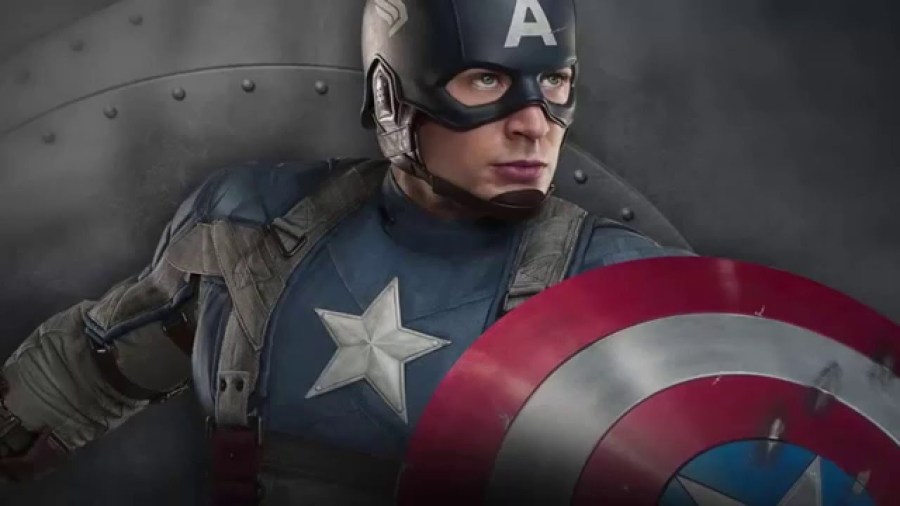
I went to see Captain America: Civil War last night. Nothing wrong or strange in that by itself, but then I thought about the last few films I’d seen at the cinema. Before this it was Deadpool and before that it was Star Wars. Two comic book adaptations and a family film. Going back further, the last film I saw that wasn’t a comic book film or a family film was The Martian, a sci-fi film.

Still nothing wrong with this. Thanks principally to the cost of a visit I don’t visit the cinema very much any more so when I go, I want to be guaranteed to be entertained. Seeing something that may challenge me or not be to my tastes is more of a risk when there’s the best part of £20 on the line.

So then I thought about TV. Currently, the two shows I’m watching most are Game of Thrones and iZombie. Again, both somewhat genre. Over the last few months, I’ve also eagerly consumed Daredevil, Jessica Jones and Gotham – three more comic book conversions. Bear in mind this is from someone who is not a comic book reader (send your hate mail to no1 Noteveryonehastolikeeverything). That same description can be levelled at many of my friends who have also enjoyed these shows. So what, one might ask, is up?

I think the answer is partly about me and partly about what is is we consume. I’ll address the first first because it’s easier. I’m something on an expert on myself.

When I was in my late teens studying English literature at A-Level, I voluntarily tried to read a number of classics. I switched genres and read things out of my comfort zone. At the same time I was happy to go to art house cinemas and watch indie films about a dysfunctional family in the mid-west (as I write this I’m not entirely convinced that wouldn’t have bored me then but the point stands). Scenes of actors looking out silently at the landscape seemed to hold meaning for me then.

Now in my thirties when I’m supposed to be sensible and mature I just don’t have the patience for this any longer. I tried to watch the much-critically acclaimed The Master a few years ago and was almost to the point of tears for the lack of plot or action. Cohen brothers’ films seemed to send me to sleep. As for challenging documentaries, I can honestly say there’s enough depressing stuff in my head already. In short I have become a total pleb.

These days entertainment is paramount in my entertainment and this is one of the reasons genre films appeal. They don’t waste my time, usually. They have a plot and they have action and, most of the time, they have a resolution. I don’t have to spend time afterwards wondering about the meaning of what I just saw or interpreting what the message was. My post-game analysis focusses on whether I enjoyed it or not. In a sense, in a life with a job and worries and writing as my creative outlet I can only spare so much brain-space for films as well.

With TV I think it is slightly different. In a post box-set revolution world of binge-watching streaming services, TV has changed. TV has become more like novels with long narrative arcs and plenty of time for reflection. Actors can now stare out into space because they’ve got another 9 hours to do the action stuff. Contrary to films, it doesn’t feel like eating up valuable time.

TV has also become emboldened and a lot of what we’re watching now just wouldn’t have been made previously. Budgets weren’t forthcoming as they now are and this is another reason I think we have so much genre TV now. Fantasy used to look naff and cheesy on TV because they hadn’t paid for it to look otherwise. The acting was hammy because good actors couldn’t be lured to do it. It’s less embarrassing to watch Game of Thrones than Hercules, principally, because it’s a much higher quality product.

Now we are in a virtuous cycle for genre pieces. They get more money and make something good, because it’s good it gets more credibility; with credibility more quality actors, directors, writers etc get drawn to these projects and they are consequently better, starting the cycle again. That’s why, my decreasing maturity notwithstanding, I’m not alone in watching about dragons and superheroes.

Is there a downside to any of this? Simon Pegg wrote an interesting piece a while ago about how as adults we are having our childhoods sold back to us to keep us infantilised. There’s a lot of truth in this. Many things that used to be for kids now successfully populate the adult world. You see people who were once considered too old for it getting excited about Dr Who, lining up to watch the latest Star Wars film and openly discussing which superpower they’d have. The average age of a gamer is 35 not 15, as all non-gamers would love you to believe. People proudly instagram themselves at conventions, where before it might have been a guilty pleasure. Fear of being labelled a nerd isn’t what is used to be.

All this might be more concerning if genre pieces were cheap and unthinking. Fortunately, this is increasingly not the case. If you see a number of films this year, the dumbest one you see won’t be a genre piece in all likelihood. Increasing success has led to increasing confidence and genre TV shows and films are more prepared than ever to ask deep questions. Having a costume doesn’t mean you can’t have the same existential trials as someone in a beret and turtle neck.

What if this is the only place people are finding this though? Is it not a bad thing if we are substituting real intellectual rigour for their slick, simplified versions in entertainment? Yes, thinking a little should not be a substitute for thinking a lot but I’m not sure it works that way. Most the people I know who love genre are also highly-engaged, informed and politically active. Ultimately, if dumb fun becomes a little less dumb then that’s a good thing. After all, I was never going to watch a documentary tonight anyway.

Where is the Dragon? New Edition for Apprentice released!

Yes. The spellbound edition for Enchantress Apprentice is now available on Amazon. Click on the link below to find it or go to this page to choose between the spellbound and stone editions of the book. Dragonard2

Links for spellbound edition by country;

US, UK, Can, Aus, Fra, Ita, Ger, NL, Ind, Jap, Bra, Esp, Mex

What kind of wizard are you? – A Quiz.

Ever wondered what kind of wizard you would be? No, we not talking sorting hats here, we’re talking about how your personality and power would come together. In the Book of Water (Enchantress Trilogy) by our author JW Whitmarsh there are four different kinds of wizard; enchanters, illusionists, seers and druids. Each have distinct approaches and perspectives but, ultimately, it is the person inside who shapes how the wizard comes to their power.

After a quick word from the author find out where you would sit

Nexus-Fiction: We’re trying to decide what kind of wizard people would be if they were born gifted in the world of the Elemental Cycle. Maybe we should start with some famous examples.

JW Whitmarsh: OK, but bear in mind this would mean they would have to be limited by the lore of my world. You can’t really dump a character from another world into a distinct fictional construct cohesively.

NX: Indulge us.

JW: Very well.

NX: Right. Let’s start with a biggie. Gandalf?

JW: Difficult. I think you’d have to treat Gandalf the Grey and Gandalf the White differently. Gandalf the Grey seems to have an affinity with fire magic principally, which says enchanter, but he also does defensive wards and shields in the manner of a seer. I’m going to say seer with exceptional skills in elemental charms. Gandalf the White on the other hand is all about light magic and in the Elemental Cycle world he’d probably be a summoner like Loreliath, but that’s not an option in this test.

NX: Alright, Merlin?

JW: The recent TV Merlin on BBC seemed to be a seer mostly but if we’re talking about the Merlin of legend he would definitely be an illusionist.

NX: Prospero?

JW: He is quite controlling and gets others to do his bidding a lot so I’d say he’d be an enchanter.

NX: Who’d be a druid?

JW: Radagast the Brown would fit very comfortably into the druid role, I think. Or Herne the hunter.

There you have it. Now it’s your turn to decide what you would be.

Question 1: If you had to face one of the following, which would you LEAST want?

  1. Going blind
  2. Losing both hands.
  3. Losing sense of taste and smell
  4. Going deaf

Question 2: It’s raining hard outside and you want to pass the time. Pick the game that would amuse you best.

  1. Poker
  2. Chess
  3. Blackjack
  4. Dominoes

Question 3: Your bedroom is drab and spartan. You can cheer it up with one thing, which would you choose?

  1. A teddy bear
  2. A plant
  3. A ceiling painting of the stars
  4. An encyclopaedia

Question 4: You have to go onstage and entertain a crowd for a short time. What is your act?

  1. A Stand-up routine
  2. Juggling
  3. Magic tricks
  4. A poetry recital

Question 5: Which danger sign would most likely adorn your workshop.

  1. 1024px-Flammable-symbol.svg 2. electricity 3. 2000px-WHMIS_Class_D-1.svg.png4. 2000px-Danger_radiation.svg

Question 6: You’re worried about security for your home, which do you invest in?

  1. A state-of-the-art alarm system
  2. Beefing up the neighbourhood watch
  3. A guard dog
  4. Hidden traps

Question 7: Which of the following phobias bothers you LEAST

  1. Crowded places
  2. Spiders
  3. Heights
  4. Snakes

Question 8: You’ve got some time to relax, what do you want to do?

  1. Take a walk in the park
  2. Visit an art gallery
  3. Listen to classical music
  4. Have a massage

Question 9: You have to commit a bank robbery and want to use as little violence as possible, how would you go about it?

  1. Fill the bank with smoke and set off the fire alarm to get all the employees out first.
  2. Hack the security cameras so you can pass by unseen.
  3. Convince the bank manager that you have his family hostage
  4. Pump a sedative into the air conditioning to send everyone to sleep

Question 10: You are in fear for your life, how will you protect yourself?

  1. Find a vantage point from where you can see anyone approaching.
  2. Escape to deep within the forest
  3. Surround yourself with the best guards you can find
  4. Retreat into a cave network that you know intimately

Answer Time.

Add up the following scores for each question. Pens and pencils ready.

1: 1)d  2)b  3)a  4)c        2: 1)d  2)c  3)b  4)a    

3: 1)b  2)a  3)d   4)c       4: 1)b  2)c  3)d  4)a

5: 1)b  2)c  3)d  4)a       6: 1)c  2)b  3)a  4)d

7: 1)b  2)d  3)c  4)a       8: 1)a  2)d  3)c  4)b

9: 1)d  2)c  3)b  4)a        10: 1)c  2)a  3)b  4)a

Mostly As Click Here     Mostly Bs Click Here    Mostly Cs  Click Here     Mostly Ds Click Here


Enchantress Awakening New Edition Available Now!

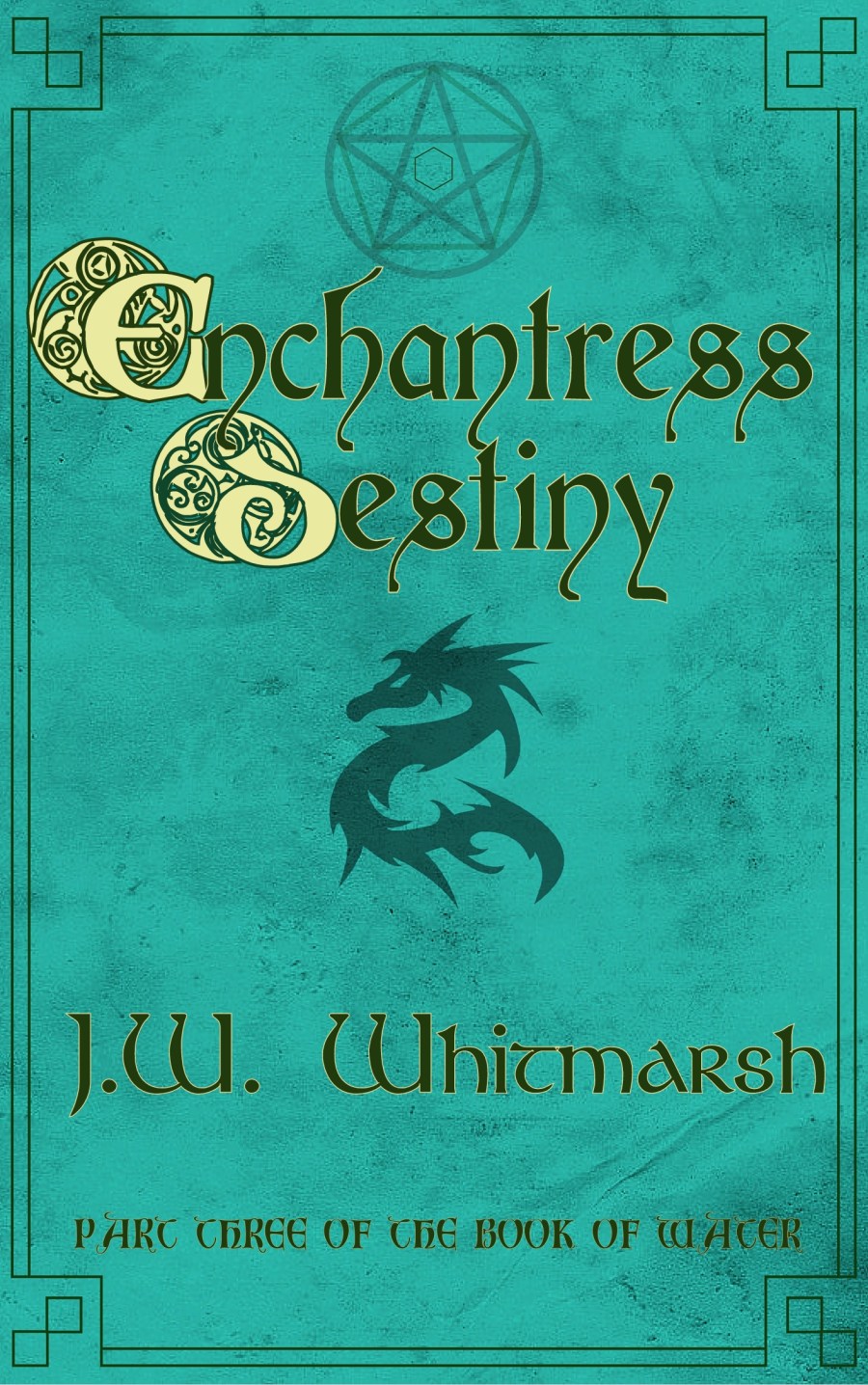
We’re pleased to announce that the Spellbound Edition of Enchantress Awakening is now available for purchase on Amazon. Meanwhile the Stone Edition is still available for the same price so now you have the choice of which cover you prefer.


Soon they will be joined by the Spellbound Edition of Enchantress Apprentice and in early May by both versions of Enchantress Destiny, which will be release simultaneously in both formats.

Quick Link to Spellbound Edition US, UK, Can, Aus, Ita, Fra, Ger, Ned

Quick Link to Stone Edition US, UK, Can, Aus, Ita, Fra, Ger, Ned


Trilogy or Epic – A reader’s poll

In light of the forthcoming release of the third part of the Book of Water, Enchantress Destiny being released at the beginning of may and the complete trilogy version being released a month later. We thought we’d look at this question more generally.

The trilogy is a well-known staple of films, books and games. So much so that almost everything now has to be a trilogy. The number three is very satisfying but is it always what people want?

Tolkien famously never regarded The Lord of the Rings as a trilogy. That was his publishers idea. Yet when it came to making the films splitting it into three was a no-brainer. Is this the eternal truth? Is it that writers prefer a single, complete story whereas the audience needs a more digestible chunks?

We’re polling this on twitter at the moment and would be really interested to know people’s thoughts with regard to books and fantasy books, in particular. In the meantime, here’s a (very) short case for both sides.

Trilogy

Every writer wants their book read and many people would be intimidated by a 900-page brick. Length can be an initial barrier for many, even if in the event they would be able to manage. This remains true even once a reader has decided to take it on. War & Peace is famously one of the least finished books. We all like a sense of progress and huge books don’t make it easy for us. When you’ve read 100 pages you should feel like you’re well into a story and not just scratching the surface. Reading is a time-consuming process the less like a slog it seems the more people will do it.

Epic

First of all, a distinction should be made. There’s a difference between a book having two sequels and breaking up a longer tale. The reason writers don’t like their books split into three is because they are not three separate stories. It is a single story that should be read in order. Who wants to read Return of the King if you haven’t read the other two first? Also, this artificial split puts a lot of pressure on the first book to be the gateway to the others as well as being a complete story in its own right. We don’t judge films and plays simply by watching the first act. Novels should be no different.

Obviously there is a lot more you could say on both sides but it’s a start. Give your vote and your opinions here  or use the hastag #trilogyvsepic with your thoughts.


But it was cool when… – times adaptations got it right

Earlier, I wrote a blog called ‘Wouldn’t it be cool if’ … – the modern curse of Sci-fi and fantasy where I argued against taking liberties in adaptations for the sake of a cool (but unjustified) moment and one reader asked me if I ever thought adaptations could be better.

I feel I need to respond to this for a number of reasons. First of all, adaptations per se are not the problem. My problem is with WIBCI moments that wreck the story around them/the characterisation of those involved. As I wrote in that article, they are by no means limited to adaptations they just have worse consequences when they are.

Still, it’s fair to ask if I think there are times when TV/film can do better than my beloved medium of text. There are many writers who are dismissive of visual media and as a result are often far less outraged by bad adaptation than their readers. To them the definitive version (theirs) will always exist no matter what goes on elsewhere.

There are others who think TV/film is always better or at least the only form people care about and while I can’t agree with them on that, there is a  tiny nugget of annoying truth in that. Adaptations can’t and shouldn’t be dismissed, as for many people this will be their first introduction to the story. A poor adaptation may stand in the way of the author getting their true vision across.

There are others still who say there are two versions and you can’t really compare them. As reasonable as this position is, I can’t agree with that either. One begat the other and for the reasons mentioned before, the other often stands as the former’s representative in the world of mainstream awareness. Note George RR Martin being called on to justify Sansa-gate when he didn’t even write that. The two are and always will be linked.

This matters to me because I don’t dismiss TV/film. I always hope for good adaptations because when I read a book I can see the potential. As a novelist, there are tools available to TV/film which I envy; most notably the performance of actors and a soundtrack and I think these are two ways in which the original story can actually be enhanced for the readers.

So after that long pre-amble here follows some examples of when TV/film really added something. Since this site is primarily focussed on fantasy I’ll stick to famous examples from that but it’s only fair that I shout out Fight Club as an example of a film that deviated to good effect. There are a number of times when minor characters are replaced with Tyler and the ending is totally different. In both cases I think this is an improvement on what is a very good original story. Ok, back to fantasy…

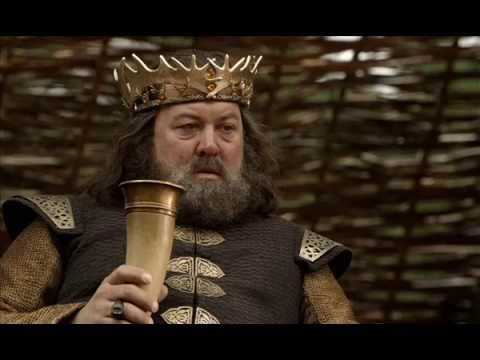
Robert & Cersei, Game of Thrones Season 1, episode 5 ‘The Wolf & the Lion’.

All of season 1 of Game of Thrones is pretty much a definitive guide on how to adapt a book faithfully. Most of the changes are editing for content (which is perfectly acceptable especially when there are budget limits) and where they are not they are fleshing out characters who we didn’t see so much of in the books.

This works because all the books in A Song of Ice and Fire use the POV structure meaning there is much that happens that we (as the readers) just don’t ‘see’. The Robert and Cersei scene in episode 5 is an example of something that ‘could have’ happened off-camera from the POV characters in question.

The two of them talk and in doing so answer some questions that we wouldn’t have known the answer to otherwise and flesh out our understanding of them .In the scene both remain ‘in character’ even when they show a side to their character you might not have expected. Some purists might take umbrage that Cersei is depicted as having loved Robert initially but I think it shows them both to be more human (albeit horrifically flawed humans).

Lighting the beacons, Lord of the Rings: The Return of the King

Ok, the set up is a bit laboured and unnecessary. Denethor in the film is a bit less ambiguous than in the book so he actively tries to stop this sensible measure leading Pippin to have to show some initiative. But once that is out of the way we are treated to one of the stand out sequences of the film. The soaring soundtrack of the Gondor theme playing over the glorious New Zealand scenery passing hope from mile to mile with every burst of firelight. In the books it is mentioned but, much as we try as writers, this is the kind of thing where film has us beat.

The battle of summer and winter, The Lion the Witch and the Wardrobe

Now it’s been a fair few years since I’ve read The Lion, the Witch and the Wardrobe but as I recall the battle is not described in a huge amount of detail. The film-makers really used the opportunity to give a scene that embraced the otherworldliness of the creatures involved; the griffins (superbly, character-fully animated incidentally) swoop in and throw rocks, the phoenix creates a fiery barrier and best of all is the moment when the big cats can’t restrain themselves any more and outstrip the rest of the cavalry while on the other side polar bears and loping werewolves run to meet them. For once, really running with an action set-piece really pays off here.

Of course there are many other examples than this (mentioning all the times an actor made a character more sympathetic is a blog in of itself) but I think in all of these cases the TV/film-makers have managed to add something without taking anything away. There is no car-crash or unravelling, simply they have taken what was there and added their own artistic flourish in in a way that remains true to the original story.


Superheroes are fine – just don’t make them invincible

I’ll start this blog with a couple of disclaimers. First, this isn’t about good adaptations as promised. That article will still come but this one has come into focus now. Second, all my references to superheroes on this blog are based on what I’ve seen on TV/film and not their comic book representations.

Right, with that covered I’ll start wrecking my nerd credentials.

The Invincibles

Invincibility has been in my mind recently, prompted by two events. The first was seeing trailers for the Batman vs Superman movie and the second was after watching Daredevil Season 2 where I was shown a trailer for the new series about Luke Cage. Now, I liked both the Christian Bale Batman films and Jessica Jones but neither of these trailers really appeal to me and I think I know the reason why – it’s invincibility.

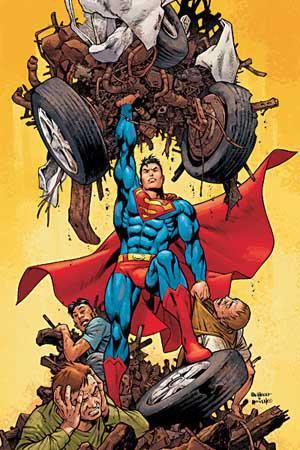
I can’t be bothered with Superman. I don’t find anything remotely interesting about him. Sure, a large part of that is he is generally quite a dull character but I’m not sure that can really be separated from the nature of his powers; namely that he is invincible.

Superman wins not by any great courage or ingenuity or triumph of character; Superman wins because he is Superman. By virtue of the gifts he is born with no enemy can match him. In the same vein, it’s hard to take any rival to him seriously because you know he’s going to win because he’s Superman.

Other have argued to me before that the real story is about how he has to struggle with his identity and the burden that his powers have more than the jeopardy as such. That might have some traction if his human identity was remotely interesting but it’s not. He’s straight-down-the-line, successful, honest and handsome. If his daytime persona were someone who is reviled,that might be an interesting conflict.

In any case, however successfully or unsuccessfully this side to his story plays out, for me, it doesn’t counterbalance the fact he is never in any real danger himself. It’s a problem and I think the writers of Superman agree with me on this – why else did they invent kryptonite?

You’re entitled to disagree but it got me thinking about my aversion to invincibility and why I hate it as a power for Superheroes. There’s a bit in the new advert for Luke Cage when a bunch of baddies pull guns on him and proceed to open fire. You know full well he’s going to fine (he duly is) and so I start thinking ‘why should I care?’ Again, the absence of any real jeopardy nullifies any stakes that may have been involved.

This got me thinking back to the TV series Heroes. The point where I lost all interest, even after the failings of Season 2, was when Sylar finally got to Claire and (drumroll) he does his thing and she’s completely fine afterwards. What? Not only is this massively anti-climatic at the time once you think about it you realise the whole tagline (and story) of the first series ‘Save the cheerleader and save the world’ becomes totally redundant. She never needed to be saved. In fact, it was impossible to save her because she can’t die.

(Further disclaimer: I’ve no idea how Heroes explained this afterwards as I was done after that).

What about regeneration?

Ok, so invincibility is bad, what about regeneration? Isn’t that a form of invincibility? I would say it depends but largely, no. I’ll take the two examples that come into my head for this. I’ll start with Wolverine. Yes, he can regenerate after almost anything but I don’t think you ever have the sense that he is impossible to kill: just difficult. So far I’ve not seen a Claire-like reveal that he cannot die. Moreover, Wolverine palpably suffers, which provides a measure of jeopardy with which we can still identify. Cut him, does he not bleed?

Next up, Dr Who. The time lord cannot die in one sense (although there is a limit on regenerations) but the fact it means a change of actor and personality means in another sense he dies indeed. It’s a death of a personality, which is something to mourn. Also, knowing as we do that each personality has a time limit, that vital element of jeopardy is always present. Is this week the week we are going to lose this incarnation?

What about invincible Super Villains

I certainly prefer the idea of near-invincible super villains to superheroes, the ‘near’ part being crucial. A villain that is exceedingly hard to kill gives a challenge to our heroes and a villain that is more powerful than any one individual hero gives cause to unite diverse groups and individuals in a common cause.

Even so, overpowering your enemy can cause problems. There should always be a way to overcome them; some feat of courage or cleverness that can bring about that miracle beyond hope. When all efforts prove fruitless, hope is shown to be futile and everything you’ve come to believe in mounts to nothing , you might reasonably question what the hell you’ve been investing in this story for (yes I am looking at you Mass Effect 3 ending – it is still not forgiven!)

One against many

Ultimately, probably the guiding principle of the invincible superhero is the chance for the one to succeed against the many. You know full well that Luke Cage is going to kick the arse or ass, if you prefer (and particularly hate donkeys) of every guy that just took a shot at him. You know that superman will come through whatever Lex Luthor throws at him. In this we have the spectre of the inevitable triumph of good over evil. We all know God will defeat Satan in the end, so we must trust in the fight.

Well, from a writing perspective I think that sucks (thanks for the spoiler Bible). The end fight should always be in the balance until the final moment.

One against many can be brilliant. [Minor spoiler] I doubt I’ll see many things on TV/film this year that compare to Daredevil vs the Dogs of Hell. But here there is jeopardy. Daredevil has limits on his powers and he can be hurt. It takes force of will and strategic use of choke points and the environment for him to get through that alive.

Sure the heroes should win in the end most of the time, but barely and with blood on their teeth and knuckles against a foe who almost had them. That is why jeopardy is so important. If your victory is inevitable (or even easy), you’re basically just backing the winning side. Any coward can do that. True courage would be to fight on in the belief you will probably lose but it’s worth the fight anyway.