A Journey through the world of The Witcher (part three)

And so to the books but where to start? The Blood of Elves was supposed to be the start of the novels so I began there and…hang on, this isn’t the beginning – the characters are talking about Geralt and Yennefer and the things they’ve already done. Look again…ah, there are two books of short stories first. Now we’re talking.

The Last Wish

Temeria. King Foltest has a stryga situation. This is very familiar. Haha, he just said ‘whoa there, Roach’. Later Geralt arrives in a place called Blavakin and I know this isn’t going to end well. Here is the Cintra where Ciri is supposed to be a Princess. The stories are nicely contained and slightly unexpectedly from my experience of the games, particularly the first two, they are funny at times and not afraid of the odd cheeky cultural reference. There’s a line about not about not wanting to dispatch a troll because he does good work maintaining the bridge that could have almost been in place in Terry Pratchett. When I later revisited the games I realised some of this humour can be found but this is a journey and we’re not there yet.

Overall, the tone is much lighter than the grimdark I had expected having played the games. Being separated from Geralt’s leaden delivery helps in this regard. Book Geralt is world-weary and cynical it is true but he’s also more sardonic and generally animated. He also pontificates on the nature of things from time to time. In short, game Geralt isn’t nearly as good company.

I get to the Last Wish that is heavily referenced in the quest of the same name in Witcher 3. This is more or less the Yennefer we meet in the games. Spoilt, headstrong and manipulative, living in luxury and putting noses out of joint in every direction. As before, it’s a more light-hearted affair than is hinted at by the Witcher 3 and provides a satisfying set up for what is to come.


The Sword of Destiny

I later found out that Sword of Destiny wasn’t released in English for a long time. I wonder how followers of the books got on because it’s quite an important missing piece to remain unfilled. I’m glad I started reading them when this volume was available as it is vital to understanding the relationship Geralt has with the two most important women (for that matter people) in his life; Yennefer and Ciri.

I’m also glad Sword of Destiny was available to me from the beginning as it remains by far my favourite of all of Sapkowski’s works. It makes the tonal transition from the lightness of The Last Wish to the gloom that will follow. As an aside, I always have a fondness for the parts of a series that hit this sweet spot. Goblet of Fire and Mass Effect 2 also fit in this category but that is a matter for another blog.

Yennefer is back and on fine form and the dragon hunt is on. Witcher 2 references paying off here with the Crinfrid Reavers (in fact they are only in Witcher 2 to do this) and Yarpen Zigren. There’s also a GWENT card pay off and the conversations between Geralt and Yennefer in The Last Wish quest now make a lot more sense.  The oft spoken of Zeugl also makes an appearance later on. In terms of the relationship between Geralt and Yennefer, if the games had been set between where they end up here and the next time they meet the Yennefer/Triss choice would have been more finely balanced.

The short form seems to suit Andrej Sapkowski. One thing he does very well is introduce characters and quickly make you care about them even if you will only know them for a short while. Sometimes it’s heart-breaking and I wonder why he did that to me. A life, like the Sword of Destiny, has two sides. There is the life of the person and there is the life that their effect on other people has. I understand now why he did that. Sometimes to understand someone you need to see how they act towards other people and how they suffer at their loss.

Sword of Destiny is mostly about the two women in Geralt’s life. For me, it is also where I started to like Dandelion. His humanity emerges from behind the facade of ridiculous hedonism. I find he is at his best when he is prepared to contradict Geralt and in these moments their unlikely partnership seems to make the most sense. Sometimes you need to see how people act towards others to understand them. Through Sword of Destiny and beyond you see the flashes of Geralt’s soft side. Not weakness but a fierce if somewhat begrudging loyalty to anyone or anything that falls under his care, even if he does call them ‘Roach’.

A point of view is like a camera. It can only focus on one thing at a time. In the world of The Witcher this often means that important things are happening out of sight. Sometimes this works, other times this is frustrating. We never get to see the Battle of Sodden. We get to stand on the hill and feel it’s aftermath. Names are mentioned that I’ve heard in the games. I think about the sorceresses who fought together there and wonder how Sapkowski would feel about how their fates play out in them. Is Sabrina Glevissig supposed to end up burnt on a wheel?  It’s an idle question really. I get the impression that Sapkowski doesn’t give the storylines of the games too much thought.

I’m glad I didn’t start with the novels. The Last Wish and Sword of Destiny is where the main characters are properly established. From what I have gathered so far it also seems that the events of these books are set to feature heavily in the upcoming Netflix series. In essence, if you want to get to know Geralt, Yennefer and Dandelion; read the short stories. I think you could go from here into the games and need almost no explanation for who is who and why these things are happening. With one exception; Witcher 3 is in many ways Ciri’s story and her story is yet to be begun. To understand that properly I had to read the novels.


Featured photo.

Photographer: Victoria Romanova aka Milligan Vick

Model: Galina Zhukovskaya


A Journey through the world of The Witcher (part two)

the_witcher_3_v6_by_harrybana-d8a4bxlHaving ploughed (maybe not the best word in context) through Witcher 2 I went straight on to Witcher 3: Wild Hunt. First of all, I have to say I am in awe of the work done on this game. Witcher 2 is in some ways quite a confined game. With this game they broke down the walls and made instead the game that any RPG fan would want.

In some ways this era could turn out to be a golden age of RPGs. Not necessarily, as for me story and a sense of place are the alpha and omega of an RPG. It’s not a given that these will improve. On the other hand, there seems to be a real sense of learning. I’m sure games developers play the output of other studios more extensively than me. I tend to find a game and play it to death. One a year can sometimes be enough. Nonetheless, I can still see cross-pollination for the good.

Elder Scrolls and particularly Skyrim reimagined the scope and beauty of a single-player open world RPG. This clearly had an effect in the development of Dragon Age: Inquisition. Horses become a standard feature (also through Red Dead Redemption) and the possibility of exploring a vaster landscape unfolds. But gamers aren’t satisfied they want to fight from horseback and this mechanic appears in the Skyrim DLC. It’s not quite there yet. Now Witcher 3 comes along and (at least on keyboard and mouse) it now works and, most importantly, is fun.

There are many points in Witcher 3 that I felt that the designers were responding to something that fans of RPGs wanted and it is then delivered. None of this is to say the RPG form has been perfected. Far from it. There is so much more that can be done and some things that should be dropped but this is for another post. The point here is that CDPR with Witcher 3 gave me a real sense of responding to what people want.

Personally, I immediately felt that my issues with the previous games had been addressed. It was no longer aimless, rather it gave clear opportunities to progress the storyline as and when suited. The graphics were once again improved (beardy Geralt is a huge improvement over previous versions). The combat was enjoyable, the interface more intuitive and gameplay was more logical (e.g. taking potions before a big fight actually possible).  After the trio of barren locations I had endured in Witcher 2 a more verdant and varied vista opened up before me

Last but not least, the VA was a step up from previous games. There was a bit more variety there (helped by more expressive animations), although there are a number of times when Geralt acts needlessly put upon, sighing when exiting a shop screen for no apparent reason and saying a begrudging ‘fine’ more times than I can count. The greater length of the game and opportunities for interactions also mean Geralt is able to show more of his character than before.

I knew I was going to choose Yennefer based on the fact that she was who he was with before he lost his memory. It seemed a bit odd to sideline Triss after spending the game before trying to save her but Geralt lets on several times that easy-going sweetness is not his bag and when previously in possession of all his faculties he had chosen Yennefer. If in doubt, do what you think the character would do.

The game moves on to Skellige and once again I was in awe. This viking-celtic mishmash setting (perhaps meant to be Orkney or the Shetlands) could have been the whole world for many a game and here it is just one place to visit. I think on this in more depth. Skyrim has myriad locations but actually how extensive are they? Even Riverun is only a few screens, probably only a part of the size of Oxenfurt let alone Novigrad.

I have probably only played a tiny fraction of RPGs out there. Still, some things stick in your mind. There’s a game called Summoner on the Playstation 2, horrible controls/gameplay, mediocre graphics, good story and a fabulous setting. Reasonably early in the game you get to the main city, Lenelle. You first enter the market on the outside then and interior market region. From there you can progress to the old town, the upmarket district and the temple area. I don’t think I’d ever seen so much space given to an urban environment before in an RPG. Now I expect nothing less.

Initially, I ignore Gwent. Once I get a feel for the shape of the game I restart in completionist mode. This time I learn Gwent. Who are all these characters on the cards? Oh look, there’s Phillipa Eilhart again. She’s referred to again but first time round I missed ‘Redania’s Most Wanted’. There are others, Milva, Cahir, Regis. Menno Coehoorn I recognise from the back story of the Dun Banner. I still want to know more about Brenna and Sodden.

I complete the main quest and move on to Toussaint. Riding out of Beauclaire I often have to stop and spin around the panaroma. Once again, I am in awe. Ah hello, here’s Regis from the Gwent card.

Something is nagging me at this stage. All this interaction with people Geralt knows but are strangers to me. I feel like I’m missing out on a lot of references and back history. I feel a bit like an outsider when I should be right in the midst. This was fine when in the previous game Geralt was recovering from amnesia but now I need to know the full story. I feel like I’m coming in late on this and I hate coming in late. I want to start from as close to the beginning as possible.

There is only one solution…I have to now read the books.

A Journey through the world of The Witcher (Part One)

the_witcher_2_enhanced_ed_for_windows_8_oblytile_by_masakari666-d5n4cngThis is not a review. I am not making a recommendation or judging whether anyone else should like the Witcher books or games. This is simply my meandering journey through the series of games and books and my thoughts along the way.

For a long time I didn’t like the Witcher and it was such a shame because I really wanted to like it. Friends, whose opinions on games I trusted, told me it was great. Reviewers told me it was great. I even liked the concept. Yet still I didn’t get on with and to explain this I have to go back to the beginning of my journey.

As previously stated, friends had told me the Witcher was great, specifically that the Witcher 2 was a great game. Long time fans of Andrzej Sapkowski’s writing might well be horrified at coming into the series from this angle but that’s how it was for me. So what was wrong with the Witcher 2? The answer is nothing, initially, as I didn’t start there. I hate coming in late on any series so I started with The Witcher.

There were things to like about the first game. I was keen on the setting and the mythology. The procedural nature of Witcher work seemed like a good tool for telling self-contained quests within a larger story. Ropey graphics (at least by the time I started playing it) notwithstanding the Grimdark aesthetic was one I could buy into.

My stumbling blocks were threefold. Firstly, by the time I got into the Vizima investigation there seemed to be a lot of going back and forth and waiting for things to happen and it all became a bit aimless. Secondly, the combat gameplay was not particularly enjoyable and this exacerbated the first problem. If you’re going to have to do some trudging it needs to be fun. Thridly, and this is the major one, I didn’t like Geralt.

That’s not to say I thought he was a bad character I just didn’t like him because of how he was presented.  This may enrage fans but I hated the voice acting. I’m not going to call it bad acting as I feel that is an accusation made far too liberally. Time and again I’ve heard people label a performance in a film or TV ‘bad acting’ when in fact it was a terrible script. The actor gets the blame for the bad line as if they were the one who wrote it. Another way in which actors get blamed unfairly is that it is sometimes the director’s fault. The actor gave the performance that was asked of them; they were merely asked for something that was bad.

As a consequence, I’m not sure the VA performance in the Witcher isn’t what the creators wanted. It seems as if there was a line about Witchers being purged of emotion and the whole performance stemmed from that. The trouble with this is that one, there is little evidence that aspect of Witchers is anything more than one of the many slanders aimed at them and two, no other Witcher in the game speaks that way. This leaves Geralt as being the sole deadened performer in the piece and comes across more as a poor-man’s Wolverine who’s been given an overdose of sedatives.

A further problem arises from this performance when it comes to the ‘Geralt as a horndog’ parts of the first game. Amorous lines delivered like that come across as skincrawlingly creepy and all the more immersion-breaking when the female characters respond favourable to it.

And so I left Geralt just as he entered the trade quarter thinking I might come back at some point but with no real enthusiasm. I could have left my journey into the world of the Witcher here but, after all, it was The Witcher 2: Assassin of Kings that people were raving about not the first game. Perhaps the faults with the first game would be fixed?

The Witcher 2 is widely reckoned to be a pretty good game. There’s a story that when President Obama visited Poland he was given a copy of it as a gift. I can’t help but try to imagine him trying to play it. It’s not easy. I assume he stayed away from the brothel.

On to the second game. Some things were indeed fixed. The combat was much improved, as were the graphics. Unfortunately, the voice acting was the same and the sense of aimlessness had not been eliminated. It was not an amazing place to hang out like Skyrim and the world and relationships were not as engaging as in the Dragon Age series, a fact I found curious as by this time I was aware there were years of book lore behind it.

Once again I left Geralt, this time in the drizzle of Flotsam thinking that one day I might go back. Here my journey seemed to end and had the Witcher series only been games it may have ended indeed. During my time away, however, another Witcher game came out, Witcher 3: Wild Hunt. Once again, people raved but I was cautious. However good it was I still didn’t like Geralt. In the other ear, so to speak, came tales of how the books were actually really good and the kind of thing I would enjoy. Here the seeds were sown for I really thought that I ought to like the Witcher.

Time passed and I had a period where I was minded to start gaming again. The nagging thoughts about giving the Witcher series another chance bore fruit and I determined that this time I would play Witcher 2 through to the end (gameplay of Witcher 1 was still a bit offputting).

I started again rather than trying to pick up where I left off. I do this often when coming back to an RPG, I don’t like coming in late. This time the Kayran was defeated and I followed the story (beware spoilers ahead). I took Roche’s path as he seemed the more natural ally and it took me to the bleak surroundings of the Kaedweni camp. After the damp drabness of Flotsam I had hoped for a bit of light and shade but at least the story was moving now. I found out the reasons behind the curse and probably at some point around here I had become immersed. The VA was grating less, I had deliberately hung out with Zoltan and Dandelion more and Geralt had started to seem less one-note than before.

Without going into the ins and outs of every quest, I arrived in Loc Muine. This was something of a disappointment. After two cesspits I had hoped for somewhere more like some of the crags I had visited on the way to Vergen. Instead, I was in an infested ruins. Oh well, I’m invested now. Clearly I had missed a number of things along the way and this would not be my best ever play-through. Might as well see this thing out. A dragon appears controlled by Phillipa Eilhart (who is this person? I mean a sorceress, obviously, but I feel like I meant to know who she is.) Everything is a mess. Sorcerers are butchered and now Nilfgaard is coming. Bloody hell.

I’ve got a bit of time on my hands, obviously the next logical step is to immediately download The Witcher 3: Wild Hunt…


Dear Critics, we need to talk about fantasy and sci-fi.

It’s been long established that critics prefer realism to flights of imagination. And by realism I mean commentary on the existing world as oppose to actually being remotely realistic. In the mind of the average critic the ability to build and entire world with cohesive culture, history, language, geography and mythology and then weaving a compelling plot on top of that is a feat far short of taking a swipe at what currently exists.

In the minds of such critics, Jane Austen is the revered Goddess. She wrote about what she knew and will therefore be forever brilliant, while Tolkien created so therefore it will forever be lightweight and in no sense ever profound. Apparently, imagination is a non-existent virtue in such thinking.

This view has always annoyed me, not least from a creative perspective when you consider the general difficulty of the two models. I’ve always felt fantasy and sci-fi writers (perhaps genre writers in general) have been unfairly judged when what they do is in many ways considerably harder.

Lately, this thought has bugged me less as I’ve felt since the Lord of the Rings films that kind of dullard thinking has been in retreat. Once Tolkien’s work moved off the page and on to the cinema screen it attained a level of respect hitherto denied to fantasy. Through a direct line this led to Game of Thrones which (albeit begrudgingly) has managed to snatch a few Emmys along the way. Arguably, less than it deserves but progress nonetheless. The traditional prejudice seemed to be wearing thinner to the point that critics could accept fantasy and sci-fi on its merits and not dismiss it out of hand.

And then the last few months happened and I feel we are back to square one. The reason is for the reaction to the trio of releases in that time; The Last Jedi, Bright and Altered Carbon. I’m not saying that the critical responses to these films is necessarily a reaction against sci-fi/fantasy. My argument is that they show the mainstream critics are ill-equipped to evaluate sci-fi/fantasy.

I’m going to start with a highly controversial assertion. If the critics say one thing and the public says another, the critics have failed in their job. I can immediately hear a flood of counterarguments rolling my way at that idea but hear me out. What I’ve stated is unequivocally wrong if, 1) a critic’s job is to tell us what we should like and not what we will like and 2) a critic is not there to recommend but only give their personal take. I tend to think both of these ideas are deeply flawed. The idea of someone appointing themselves as an arbiter of tastes is incredibly dubious from the outset, while the idea of a personal take doesn’t sit with having a paid position in the media as a gatekeeper to culture. It’s either personal or it’s a judgement on what people will enjoy; it can’t really be both. There has to be a compromise somewhere.

The next argument would be the idea that what is popular and what is good are not necessarily the same thing. I would completely agree with that statement. On the other hand, there are far too many who seem to take the view that because something is popular it is disqualified from being good. If 3 million people rate something as 8 out of 10 there is a reason for that. You don’t have to agree with that reason but you should acknowledge it exists. And if your conclusion is that reason is people are idiots I go back to my previous assertion. If it is your job to recommend things to idiots, then you should recommend what idiots like; anything else is an indulgence.

All this is very black and white and too easy to pull apart. In reality, there is a middle ground and for the purpose of this piece I will focus on the discrepancy factor. If the critics say a film is a 93% film and the public say it is an 87% film, (or vice versa) it’s probably fair to say that most people think it’s good. There may be reasons why one group likes it more than the other but there is a consensus. Example, ‘Aliens’; on Rotten Tomatoes critics say 98% and public says 94% based on a considerable amount of reviews. It’s fair to say that reviewers professional and amateur think this is a very good film. I would say more often than not there is this kind of agreement.

Where I grow wary is when there is a huge discrepancy, let’s say more than 20%. There’s clearly two ways this can go. You can have something loved by critics that leaves fans unmoved and you can have something appreciate by the public that is dismissed by the critics. In the case of the former this seems to happen with film that are quirky, understandably so. Critics see a lot of derivative and formulaic films, Anything that breaks the mould will be appreciated. By the same token, fans who see maybe a handful of films in a year are generally less bothered by cliches and more concerned about entertainment.

In the latter case, it happens more often with genre films or blockbusters. The critics get fixated on a couple of details (something they deem people ought not to like) or parts that seem derivative and miss out on the sense of escapism and the fact that the average audience member may never have seen something like that before.24218725477_c283330936_b

All of which brings me back to the trio of sci-fi released that have so far divided critic from fan starting with the first release; The Last Jedi. At time of writing rotten tomatoes has this as 91% from critics and 48% from the public. I’ve read some articles (which I’m not going to link as they don’t deserve the attention) that have summarily dismissed this discrepancy with justifications ranging from mass bot attack to a backlash against the progressive nature of the film.

My judgement is that the bot attack theory is nonsense. There are too many reviews on rotten tomatoes that are simply from people who are disappointed; not people with agendas. Not everyone is giving one star and claiming it is the worst thing ever. Many are three star reviews fairly explaining what they felt was lacking. For the record, I’d put myself in this group. I don’t think it is worth 91% nor is it worth 48%. It wasn’t awful but it was far from being great.

As to the PC backlash. It’s fair to say that is a thing for a few people but it does not seem to be a majority. Anecdotally, the most common criticism I’ve read, heard or seen is that there were elements of the film that were off (ahem, flying Leia), poorly plotted and lore-breaking. And I think here we have something close to an explanation for the 50% discrepancy.

Generalisation warning: critics like to be surprised. Fans like continuity. Critics applaud when Luke throws aside the lightsaber. Fans irk at the seeming change in Luke’s personality. Critics enjoy the change of the good guys plans not going to plan. Fans get irate that people on the same side aren’t talking to each other for the sake of a plot contrivance. Critics swoon at an artful silent black and white shot. Fans pull their hair out when a hyperspace ram is suddenly a thing, apparently going against all previous logic of not just the film in question but the entire series.

In essence, the critics think they are watching a piece of cinema and do not have sufficient respect for the world in which it is set. Sure they may consider themselves above such things but now we’re in the territory of music magazines sending someone to review the gig of a band they hate. It all gets a bit pointless.

Next up Bright, which according to the critics was the worst film of the year…(continued in next blog).


The Elemental Cycle: An Update

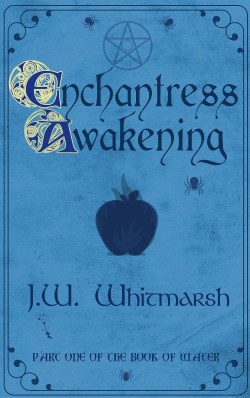
vrperFor those paying attention, it has been a while since anything was released from the Elemental Cycle. The reasons for this are myriad (marketing and editing issues, whole-scale relocation etc) but the good news is JW Whitmarsh is still writing and book five ‘Mars Fallen’ is in its final stages. Therefore this seems like a good point to look at what is to come in the next few months for the Elemental Cycle.

The first thing on the horizon is a second edition of ‘Valkyrie Rising’ with all new artwork consistent with the spellbound editions of the Books of Water. Hot on the heels of that we expect to be able to release the first edition of ‘Mars Fallen’. As for what lies in stall after that, we thought it best to ask the author….

Nexus Fiction: We’ve had three books from Water, one book from Earth and one book coming from Fire. How can we expect the story to continue from here? Are we going to start again from Air and Spirit or are the stories unfolding going to continue before that?

JW Whitmarsh: It’s always a difficulty when writing a story that develops across continents keeping hold of what is concurrent and what is consecutive. That said, the further the story goes on the more linear it will become. So far book 3 of water finishes before then end of book 1 of Earth, while book 1 of Earth finishes a couple of months before the end of book 1 of Fire.Fallenstraightened

NX: Will that staggering of events continue through the next volumes?

JW: We shall see. Nominally, I consider book 2 of Earth to be book 6 overall and book 2 of Fire to be book 7 but they will happen in tandem.

NX: Do you intend to write them in tandem?

JW: Provisionally, but the writing process is never simple. You have to allow yourself to be carried along. Some chapters are also easier than others. In many ways the prospect of writing two stories simultaneously is quite appealing. It’s harder to get writers block when you have two outlets.

NX: Is writer’s block a constant issue for any writer?

JW: I can’t speak for all writers. What I would say is that for me it’s never a case of running out of ideas; it’s more how to organise them and bring them to life. But more than that it’s about having the time to sit down and work through whatever is giving you difficulty. I prefer to write in long blocks of hours. Unfortunately, life doesn’t give you those all that often.

NX: What has been the biggest problem with ‘Mars Fallen’?

JW: I would say pacing and balance more than anything else. With previous volumes the story has primarily revolves around a singular protagonist. ‘Mars Fallen’ has three. Finding the right way to give each their voice is a new challenge.

NX: There are many characters in the Elemental Cycle. Are there any that you find easier to write than others?

JW: Yes. [Spoiler alert]. Tovrik is generally quite easy to write because he comes from a perspective of knowledge. He has spend so long in study that there is no need to show a road of discovery. He has his history already, he is fully formed. Whenever I write Tovrik there is a sense of confidence that I know what he is going to say or how he is going to react because nothing surprises him.

NX: By the same token then, who is the hardest to write?

JW: Probably Caleigh. She has the burden of carrying the story quite often and doing that while asserting your identity is not easy.  Coupled with the fact that her identity is not yet fully formed. She is being asked to do things that are utterly unreasonable for someone of her age and experience. So often she is in the role of learning by doing that it’s difficult to know until something is in process how she’s going to feel about it.

NX: Will we ever get to see more into the lives of the support characters?

JW: Well, yes. In the main story there are many who have a great role yet to play. In terms of stand alone stories though, there are a few. We’ve talked about it before and the more I think about it the more I’m sure there will be some side tales for Owain, Ysabelle and Eleric. I can definitely see a prequel trilogy there.

NX: It may be far too early to ask but have you thought about what is to come for the world of the Elemental Cycle after the Elemental Cycle is finished?

JW: Yeah, there are several thoughts in motion. I don’t see there being direct sequels as by the time the Elemental Cycle is done there will be plenty enough but I have ideas for the world some hundreds of years after.

NX: Can you give any clues about what that might be?

JW: Pirate wizards. That’s all I’m saying for now. We’re a number of years away from that.

NX: Suppose a new reader sees ‘Mars Fallen’, can they join the Elemental Cycle at that point?

JW: There’s no strict order so far from element to element. It’s possible to start from Book 1 of fire if you like. A lot of things will make more sense for readers who start on the Book of Water but that’s not to say there isn’t as good a journey working from Fire first. As an author you are kind of omnipotent in your world so you can never predict exactly what experience a reader will have when they don’t know what is going to happen.

NX: Going back to the previous point about intersection of storylines, do you have a notion of where the books of Air and Spirit are going to fit in?

JW: First of all, there’s not necessarily going to be distinct trilogies as with the Book of Water. That may well be the only time that three stories of one element conveniently flow into each other. It’s also quite likely that the other elements will not have 3 distinct parts. Earth and Fire are on a definite collision course and I think that is something we can expect a lot from here on with all the elements.

There you have it. Look out for more pages being added to this website along the way and for links to the new books as they are released.

It’s all about the antagonists

Here’s a quick question for you; who is the most important character in the Harry Potter series? The answer is obvious, right? It’s the Harry Potter series; every book is called Harry Potter and the…It has to be Harry, surely? I would argue not: it’s Voldemort. That’s not to say Harry is some dull empty vessel who’s only purpose is to be he reader’s eyes into the world. On the contrary, Harry is a great character. He’s far from being a Luke Skywalker, true blue hero who is less interesting than the folk around him. Harry is wounded and sympathetic and occasionally flawed (although I’m not sure you’d get all this by just watching the films). Harry has many qualities but he is not the main mover of the narrative: that is Voldemort.

voldyThink about it. The book begins with the apparent first defeat of Voldemort. Harry is only famous because of the fame Voldemort bestowed on him by being unable to murder him. Likewise, the Harry potter series finishes with the final defeat of Voldemort. His absence is what tells us it is all over. Harry has a life after this but the series doesn’t continue to follow him in his life without Voldemort. Sure, there may be Cursed Childs and whatnots to come but they are addenda to the story of how Voldemort was defeated.

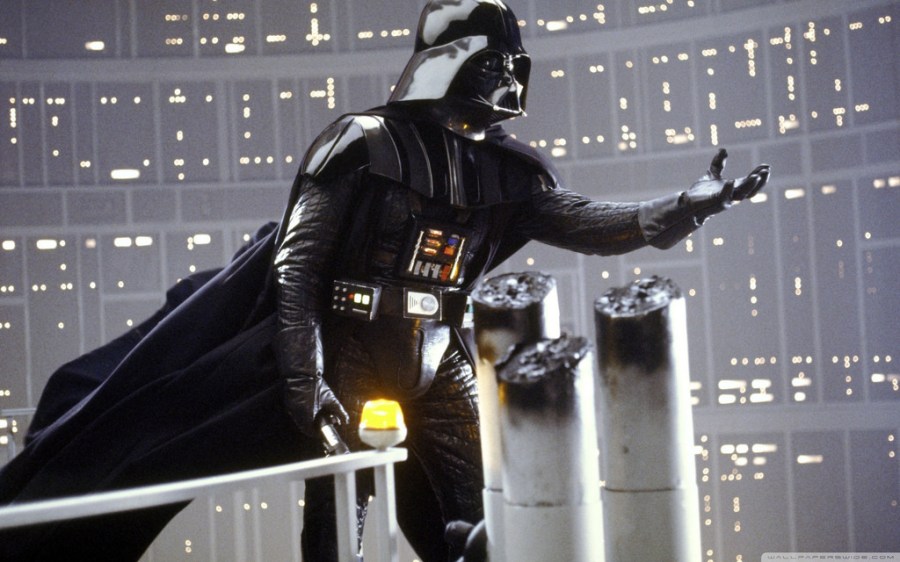
Speaking of Luke Skywalker. How interested are we in his life when there is no big bad around? The main story finishes with the death of Darth Vader. We don’t rejoin him until the reboots have another antagonist to throw at us. Likewise, it’s no surprise that we leave Middle Earth with the demise of Sauron.

I’ve been thinking about antagonists recently while reviewing the Defenders’ respective series. The broad consensus seems to be in terms of quality they go; Jessica Jones, Daredevil and then, someway behind, Luke Cage. Is it just merely a coincidence that while Jessica had David Tennant’s brilliance as Kilgrave and Daredevil had the grinding fury of Vincent D’Onofrio’s Kingpin, Luke Cage had to contend with the short-lived and nonthreatening Cottonmouth and then the silliness of Diamondback?

I’m only halfway through Iron First but the major problem so far seems to be the lack of a good antagonist. All of which makes me think, maybe it’s all about the antagonist after all. At least when it comes to sci-fi and fantasy. Other genres have other considerations. Detective novels while benefiting from good antagonists are more about the protagonist.So what is it about sci-fi and fantasy that make antagonists so important? Partly, it is that a lot of sci-fi and fantasy is about conflict against an exceptional threat. If the threat is not sufficiently threatening then defeating it is less compelling.

Another reason is sci-fi and fantasy is often (though not always) less morally ambiguous. In a fight between good and evil the only way the evil is going to be defeated is through terminal justice. There will be no accommodation or settlement. The bastard needs to die and we need (for the most part) to be ok with the bastard dying. Therefore, their death must be both utterly necessary and morally and narratively satisfying.

joffYou might argue that some fantasy is not so black and white, A Song of Ice and Fire, for example. While there may be some truth in this, the series does also provide us with some genuine hate figures for whom we will endure all kinds of suffering to our heroes just to see them get what is coming, like Joffrey and Ramsay. Equally, the Ice and Fire overarching it all pretty unambiguous. Those white walkers/Others have to be defeated.

Ah, that’s fantasy but sci-fi is different, you might argue. Sometimes there is an accommodation in sci-fi, like in the Matrix and Mass Effect. In the case of the Matrix films, they clearly cottoned on to the fact that we were more interested in an antagonist battle so they made it more about the recognisable Smith than the amorphous Matrix itself. While Mass Effect 3 has one of the worst endings ever, so let that be a lesson about deviation from the template.

Other examples? Look at Star Trek. What are considered to be the best Star Trek films? Generally, people say Wrath of Khan, Undiscovered Country and First Contact. For which we have Ricardo Molteban’s Khaaaaaaaan, Christopher Plummer’s Shakespeare quoting Klingon and, arguably the greatest Star Trek villain of all, the Borg.

For that matter, look at the series. What turned around DS9? The introduction of proper antagonists in the form of the Dominion. What was often the difference between a good Babylon 5 episode and a cringe-worthy one? Did it have the Shadows in it? In the same vein, I never really had much interest in Star Gate but I bothered with Stargate: Atlantis because the creepy Wraiths seemed like a genuine threat. Oh and lest we forget, what’s the surefire way to up the stakes in any series of Dr Who?I give you everyone’s favourite demented space nazis wailing EXTERMINATE!

It’s a lesson to all of us when we write. While we all want to give the world the next brooding hero who will show us complexity, humour and virtuoso fighting skills so far uncontemplated, make sure there’s someone out there for them who is capable of killing them and and shaping the narrative of the world they wish to terrorise. As much as heroes, villains have a challenge to answer. Let us hope they rise to the occasion.

loki


Hey, they’re not supposed to die!

First up….MASSIVE SPOILERS FOR ANYONE WHO HAS NOT SEEN GoT 6 08/READ DANCE WITH DRAGONS.

Ok, we’re happy now, yes? You realise what’s coming? Great.

Here’s some names off the top of my head (I’m sure westeros.org  has a much more comprehensive list) S1  – Mago, s2 – Irri, Xaro Xhoan Daxos, Rakharo, s3 – Greatjohn Umber, s4 – Grenn, Pyp, Jojen Reed, s5 – Stannis, Shireen, Mance Raydar, Barristan Selmy, Myrcella s6 – Doran Martell, Trystane Martell, Areo Hotah, Brynden ‘Blackfish’ Tully, Shaggydog, Osha, Summer, Hodor, Jorah Mormont (arguably), Roose Bolton and Walda Frey.

What do all these characters have in common? They are all (as of 608) dead in the TV show Game of Thrones and (as of Dance with Dragons) still alive in A Song of Ice and Fire. This is curious because of any criticism one might make of George RR Martin’s fantastical world, that he doesn’t kill of enough of his characters is not one. Why the disparity and what effect does it have on the story?

It’s fair to say of this list not all are equally inexplicable so (based purely on my own speculation) I’m going to separate them into different categories; dead men walking, not like this, herd thinning and bodycounters.

Dead (wo)men walking or It is known

These are the characters who we haven’t seen (in an imaginary sense) die yet in A Song of Ice and Fire but who will likely meet their end much the same as on the show. The first name that leaps to mind in this group is Hodor. When I saw that play out I thought it had Martin’s fingerprints on it and duly that was later confirmed. I would also just about put Jojen Reed in this group too as I think narratively speaking he will die in pretty much the same place, if not the exact same manner.

Just about sneaking into this bracket I would also include Shireen Baratheon. I’m not sure that in the books it will be by Stannis’s order but I think she is for the flames nonetheless. However, if it is not under her father’s command then she should be pushed into the next category for reasons that will become clear.

There’s not much to write about the It is Knowns because their role is much the same. Some would say they constitute spoilers, I tend to think at this point anyone watching the show hoping that nothing of the books is going to be revealed is probably deluding themselves.

Not Like This

Insert your Matrix gifs here.

This group is of characters I expect to die but not in the way it is shown on GoT and why the different ending makes a difference. The least important of these is probably Mago. Do you remember him? Khal Drogo ripped out his throat in Season 1. It was someone else in the book and Martin is insistent that Mago is due to have a significant role in future instalments. My guess is that he will play the same role as Khal Jhaqo’s bloodriders in the current season and this is simply a case of giving a different name to a character. I could be wrong but until I know otherwise I’m happy to let this one go.

Stannis I would include in this particular category. For the story to advance, Stannis has to die and it seems likely it will be in the North. However, I’m pretty damn certain Martin’s battle won’t consist of charging a load of weary infantrymen in loose formation against the riders of the Rohirrim who have suddenly and inexplicably flocked to the Bolton banner. Likewise, I’ll be shocked (and not in a good way) if Brienne conveniently arrives to deliver Stannis his death blow. I could be wrong but that felt more Hollywood than Westeros, where neat vengeance is rarely delivered. In Martin’s world, punishment is usually meted out by those with no claim to deliver it. Think Ramsey on Theon and Vargo Hoat (Locke on TV) on Jaime.

Whatever fate lies in store for Stannis I imagine it will be a little more complex. If it turns out not to be him who orders Shireen to be burnt then that would reinforce my suspicion that he was made responsible for that so viewers would be OK with killing off a major character in a fairly summary fashion. Certainly they did seem to rush to the end of his storyline.

Myrcella is another whose fate will almost definitely play out very differently. If we accept that the prophecy about Cersei’s children is true then Myrcella will die at some point. That is where the similarity likely ends. Everything Dorne post-Oberon has been horrifically misguided. The Sand Snakes are miscast and badly written. Ellaria has had a complete personality transplant and the whole plot line makes no sense whatsoever.

The result is Myrcella won’t die on a ship with Jaime because Jaime was never supposed to go to Dorne. It makes zero sense for the Sand Snakes to kill her because they were trying to make her Queen. Even if later developments that were never shown on TV pan out, she would still be betrothed to their cousin. In short, I expect little to no resemblance to what we have seen on our screens.

This matters because having Ellaria/Sand Snakes kill her is what led them into the current storyline where  having gone directly against his wishes they would have to be executed or be in open rebellion against Doran and…well, we’ve seen how that turned out.

I’m just about persuaded to put Jorah Mormont and Barristan Selmy into this group. In Jorah’s case, he’s been such a major character that I can’t think the showmakers would give him a death sentence unless he had no more role to play. The fact that they’ve cut and pasted John Connington’s fate onto him means that should he die it will definitely be in a completely different manner.

Similarly, while Selmy may or may not be long for Martin’s world it is clear that he won’t die at that point because he is still alive way beyond it, partaking in vital acts in the defence of Mereen. In his case I feel the premature departure has had a negative effect. Another senior figure in Mereen would make it look a bit less like everything is being done by three people in an empty pyramid. The only reason I don’t put Selmy into the herd-thinning category is that if he is to die in the books it’s probably fairly soon.

Lastly, I’m just about persuaded to put Roose and Walda in this group. Like with Stannis, Roose has to die for the plot to move forward and in A Song of Ice and Fire, people are rarely merciful to the families of the deceased. I’m not convinced his end will be as mundane as being stabbed in the stomach by Ramsey after dropping huge hints that he means to set him aside.

Herd Thinning aka We have a budget

The deaths I would describe as herd-thinning are where a character is killed on the TV show and there is no particular reason to think that character is about to die or their death was at least premature for no good in-world reason. These deaths are better explained by budgetary constraints, actor schedules and a general desire to keep the cast numbers in check both for cost and simplifying things for the viewer.

Rakharo (who seems to be an amalgam of Jhogo and Rakharo from the books) seems to have been killed off because the actor had a scheduling conflict. Presumably, if not he would have remained as the visible representative of the loyal Dothraki going on. It may have been the same with Clive Mantle (Greatjohn), although his lines and personality were fused on to the Blackfish from Season 3 onwards.

On the matter of the Blackfish, given that he is explicitly still alive and active in the books beyond the siege of Riverrun I can only think the showmakers considered him an expense they could do without (unless he is to take the place of Un-Cat).

Herd-thinning is the only reason I can think of that would explain the terrible plot decisions of the Dorne storyline. By killing off Doran and Trystane they have closed the door on a number of developments in that region, which to me says they wanted to give the viewers a reason to think Dorne is out of the picture now. Areo Hotah is just more collateral damage in this sense.

Last but by no means least in this group are the direwolves Summer and Shaggydog. They may die in the books but given how much they’ve been shoved to the side because CGI is expensive it’s hard to discount the possibility that this was a motivating factor in killing them off.

Bodycount

The last group includes Osha, Gren, Pyp, Irri and Xaro Xhoan Daxos. Each of these characters was killed not because they are set to die imminently but simply because of the drama their death would give to particular moments. In the case of Pyp and Gren this works. Pyp’s end heightens Sam’s jeopardy while also showing how far he has come as a character and Gren takes the place of a character not seen in the show. His death was done to make people care about a moment that deserves to be cared about.

Irri was killed to heighten the sense of danger in Qarth and in this case it didn’t work at all. The stolen dragons storyline was a major misstep and killing Irri to enable it was a waste of a character and an actress. It also cut much of Dany’s link to the Dothraki and made her entourage too light subsequently. It’s arguable that her role is filled by an aged-up Missandei but they are very different personalities and I can’t see that Irri’s presence wouldn’t have added more.

At the other end of the dragon theft storyline is Xaro Xhoan Daxos. Given that he’s a completely different character on the show to the book version his loss isn’t that important and probably preferable. The presence of the changed character was more problematic as it was integral to the deviations that undermined Dany’s season 2 arc.

Finally, Osha. She might die but I hope if she does it’s handled better than on the show. Another knife stabbing with little build up and zero reflection afterwards. She might as well have been a guest appearance. It’s possible that she was taking the role of one of the spear wives from the book but that doesn’t seem like a great reason to kill her.

Does it matter?

As with most questions, it depends. In the first group not at all. In other cases, as a book reader every time one of these deaths happen you see future storylines and scenes dying before your eyes. That is easier to take some times than others. Not including Arianna Martell is one thing. Bringing in Dorne then changing its course completely is quite another.

When you know you’re not going to see something you’d hoped to see it’s important that you’re given it in such a way that you can accept its loss. When things are edited for content you can always think it happened it just wasn’t shown. So in the Lord of the Rings films, for example, the scouring of the Shire could have happened (in the cinema release version), Tom Bombadil could have happened, the appendices could have happened; we just didn’t see it. There’s no way to undo aberrations like Osgiliath, unfortunately.

For the show watcher who hasn’t read the books and never plans to you can argue that it doesn’t matter at all. After all, if they had no expectations then there is no loss. However, as with any death if it is done without good reason it notices. I generally watch Game of Thrones with non-book readers and when a death doesn’t seem part of the story they tend to be taken out of their suspension of disbelief, frown and ask ‘does that happen in the books?’. They also ask this with stuff that’s in the books but usually after the end of the episode because they are still invested.

I appreciate that Game of Thrones doesn’t have an unlimited budget and my complaint isn’t with that. In fact, if I have a complaint it is directed at TV and film in general. Deaths of established characters can be very effective in drama. It’s important that it is never used cheaply and when that character has more stories to tell that will now never see the light it is all the more important the reasoning is sound.


Am I getting more childish or has childish got more mature?

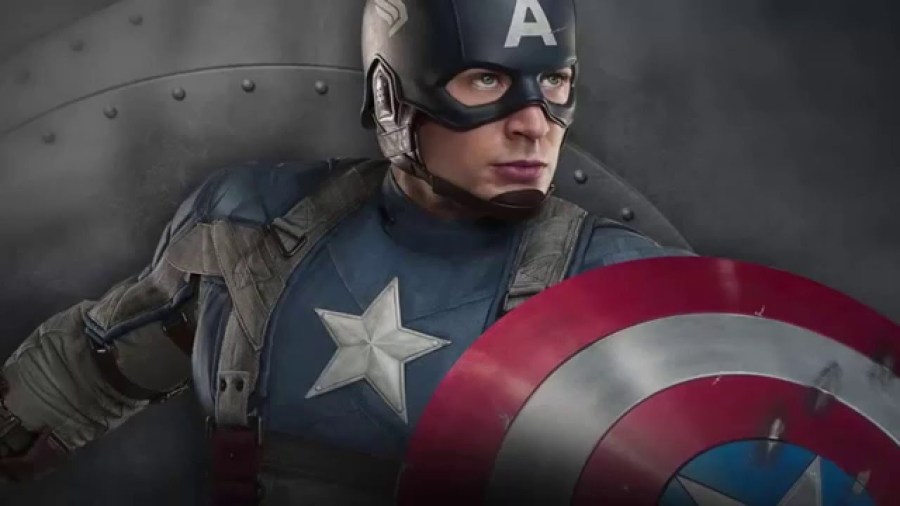
I went to see Captain America: Civil War last night. Nothing wrong or strange in that by itself, but then I thought about the last few films I’d seen at the cinema. Before this it was Deadpool and before that it was Star Wars. Two comic book adaptations and a family film. Going back further, the last film I saw that wasn’t a comic book film or a family film was The Martian, a sci-fi film.

Still nothing wrong with this. Thanks principally to the cost of a visit I don’t visit the cinema very much any more so when I go, I want to be guaranteed to be entertained. Seeing something that may challenge me or not be to my tastes is more of a risk when there’s the best part of £20 on the line.

So then I thought about TV. Currently, the two shows I’m watching most are Game of Thrones and iZombie. Again, both somewhat genre. Over the last few months, I’ve also eagerly consumed Daredevil, Jessica Jones and Gotham – three more comic book conversions. Bear in mind this is from someone who is not a comic book reader (send your hate mail to no1 Noteveryonehastolikeeverything). That same description can be levelled at many of my friends who have also enjoyed these shows. So what, one might ask, is up?

I think the answer is partly about me and partly about what is is we consume. I’ll address the first first because it’s easier. I’m something on an expert on myself.

When I was in my late teens studying English literature at A-Level, I voluntarily tried to read a number of classics. I switched genres and read things out of my comfort zone. At the same time I was happy to go to art house cinemas and watch indie films about a dysfunctional family in the mid-west (as I write this I’m not entirely convinced that wouldn’t have bored me then but the point stands). Scenes of actors looking out silently at the landscape seemed to hold meaning for me then.

Now in my thirties when I’m supposed to be sensible and mature I just don’t have the patience for this any longer. I tried to watch the much-critically acclaimed The Master a few years ago and was almost to the point of tears for the lack of plot or action. Cohen brothers’ films seemed to send me to sleep. As for challenging documentaries, I can honestly say there’s enough depressing stuff in my head already. In short I have become a total pleb.

These days entertainment is paramount in my entertainment and this is one of the reasons genre films appeal. They don’t waste my time, usually. They have a plot and they have action and, most of the time, they have a resolution. I don’t have to spend time afterwards wondering about the meaning of what I just saw or interpreting what the message was. My post-game analysis focusses on whether I enjoyed it or not. In a sense, in a life with a job and worries and writing as my creative outlet I can only spare so much brain-space for films as well.

With TV I think it is slightly different. In a post box-set revolution world of binge-watching streaming services, TV has changed. TV has become more like novels with long narrative arcs and plenty of time for reflection. Actors can now stare out into space because they’ve got another 9 hours to do the action stuff. Contrary to films, it doesn’t feel like eating up valuable time.

TV has also become emboldened and a lot of what we’re watching now just wouldn’t have been made previously. Budgets weren’t forthcoming as they now are and this is another reason I think we have so much genre TV now. Fantasy used to look naff and cheesy on TV because they hadn’t paid for it to look otherwise. The acting was hammy because good actors couldn’t be lured to do it. It’s less embarrassing to watch Game of Thrones than Hercules, principally, because it’s a much higher quality product.

Now we are in a virtuous cycle for genre pieces. They get more money and make something good, because it’s good it gets more credibility; with credibility more quality actors, directors, writers etc get drawn to these projects and they are consequently better, starting the cycle again. That’s why, my decreasing maturity notwithstanding, I’m not alone in watching about dragons and superheroes.

Is there a downside to any of this? Simon Pegg wrote an interesting piece a while ago about how as adults we are having our childhoods sold back to us to keep us infantilised. There’s a lot of truth in this. Many things that used to be for kids now successfully populate the adult world. You see people who were once considered too old for it getting excited about Dr Who, lining up to watch the latest Star Wars film and openly discussing which superpower they’d have. The average age of a gamer is 35 not 15, as all non-gamers would love you to believe. People proudly instagram themselves at conventions, where before it might have been a guilty pleasure. Fear of being labelled a nerd isn’t what is used to be.

All this might be more concerning if genre pieces were cheap and unthinking. Fortunately, this is increasingly not the case. If you see a number of films this year, the dumbest one you see won’t be a genre piece in all likelihood. Increasing success has led to increasing confidence and genre TV shows and films are more prepared than ever to ask deep questions. Having a costume doesn’t mean you can’t have the same existential trials as someone in a beret and turtle neck.

What if this is the only place people are finding this though? Is it not a bad thing if we are substituting real intellectual rigour for their slick, simplified versions in entertainment? Yes, thinking a little should not be a substitute for thinking a lot but I’m not sure it works that way. Most the people I know who love genre are also highly-engaged, informed and politically active. Ultimately, if dumb fun becomes a little less dumb then that’s a good thing. After all, I was never going to watch a documentary tonight anyway.