A Journey through the world of The Witcher (part three)

And so to the books but where to start? The Blood of Elves was supposed to be the start of the novels so I began there and…hang on, this isn’t the beginning – the characters are talking about Geralt and Yennefer and the things they’ve already done. Look again…ah, there are two books of short stories first. Now we’re talking.

The Last Wish

Temeria. King Foltest has a stryga situation. This is very familiar. Haha, he just said ‘whoa there, Roach’. Later Geralt arrives in a place called Blavakin and I know this isn’t going to end well. Here is the Cintra where Ciri is supposed to be a Princess. The stories are nicely contained and slightly unexpectedly from my experience of the games, particularly the first two, they are funny at times and not afraid of the odd cheeky cultural reference. There’s a line about not about not wanting to dispatch a troll because he does good work maintaining the bridge that could have almost been in place in Terry Pratchett. When I later revisited the games I realised some of this humour can be found but this is a journey and we’re not there yet.

Overall, the tone is much lighter than the grimdark I had expected having played the games. Being separated from Geralt’s leaden delivery helps in this regard. Book Geralt is world-weary and cynical it is true but he’s also more sardonic and generally animated. He also pontificates on the nature of things from time to time. In short, game Geralt isn’t nearly as good company.

I get to the Last Wish that is heavily referenced in the quest of the same name in Witcher 3. This is more or less the Yennefer we meet in the games. Spoilt, headstrong and manipulative, living in luxury and putting noses out of joint in every direction. As before, it’s a more light-hearted affair than is hinted at by the Witcher 3 and provides a satisfying set up for what is to come.


The Sword of Destiny

I later found out that Sword of Destiny wasn’t released in English for a long time. I wonder how followers of the books got on because it’s quite an important missing piece to remain unfilled. I’m glad I started reading them when this volume was available as it is vital to understanding the relationship Geralt has with the two most important women (for that matter people) in his life; Yennefer and Ciri.

I’m also glad Sword of Destiny was available to me from the beginning as it remains by far my favourite of all of Sapkowski’s works. It makes the tonal transition from the lightness of The Last Wish to the gloom that will follow. As an aside, I always have a fondness for the parts of a series that hit this sweet spot. Goblet of Fire and Mass Effect 2 also fit in this category but that is a matter for another blog.

Yennefer is back and on fine form and the dragon hunt is on. Witcher 2 references paying off here with the Crinfrid Reavers (in fact they are only in Witcher 2 to do this) and Yarpen Zigren. There’s also a GWENT card pay off and the conversations between Geralt and Yennefer in The Last Wish quest now make a lot more sense.  The oft spoken of Zeugl also makes an appearance later on. In terms of the relationship between Geralt and Yennefer, if the games had been set between where they end up here and the next time they meet the Yennefer/Triss choice would have been more finely balanced.

The short form seems to suit Andrej Sapkowski. One thing he does very well is introduce characters and quickly make you care about them even if you will only know them for a short while. Sometimes it’s heart-breaking and I wonder why he did that to me. A life, like the Sword of Destiny, has two sides. There is the life of the person and there is the life that their effect on other people has. I understand now why he did that. Sometimes to understand someone you need to see how they act towards other people and how they suffer at their loss.

Sword of Destiny is mostly about the two women in Geralt’s life. For me, it is also where I started to like Dandelion. His humanity emerges from behind the facade of ridiculous hedonism. I find he is at his best when he is prepared to contradict Geralt and in these moments their unlikely partnership seems to make the most sense. Sometimes you need to see how people act towards others to understand them. Through Sword of Destiny and beyond you see the flashes of Geralt’s soft side. Not weakness but a fierce if somewhat begrudging loyalty to anyone or anything that falls under his care, even if he does call them ‘Roach’.

A point of view is like a camera. It can only focus on one thing at a time. In the world of The Witcher this often means that important things are happening out of sight. Sometimes this works, other times this is frustrating. We never get to see the Battle of Sodden. We get to stand on the hill and feel it’s aftermath. Names are mentioned that I’ve heard in the games. I think about the sorceresses who fought together there and wonder how Sapkowski would feel about how their fates play out in them. Is Sabrina Glevissig supposed to end up burnt on a wheel?  It’s an idle question really. I get the impression that Sapkowski doesn’t give the storylines of the games too much thought.

I’m glad I didn’t start with the novels. The Last Wish and Sword of Destiny is where the main characters are properly established. From what I have gathered so far it also seems that the events of these books are set to feature heavily in the upcoming Netflix series. In essence, if you want to get to know Geralt, Yennefer and Dandelion; read the short stories. I think you could go from here into the games and need almost no explanation for who is who and why these things are happening. With one exception; Witcher 3 is in many ways Ciri’s story and her story is yet to be begun. To understand that properly I had to read the novels.


Featured photo.

Photographer: Victoria Romanova aka Milligan Vick

Model: Galina Zhukovskaya


The Elemental Cycle: An Update

vrperFor those paying attention, it has been a while since anything was released from the Elemental Cycle. The reasons for this are myriad (marketing and editing issues, whole-scale relocation etc) but the good news is JW Whitmarsh is still writing and book five ‘Mars Fallen’ is in its final stages. Therefore this seems like a good point to look at what is to come in the next few months for the Elemental Cycle.

The first thing on the horizon is a second edition of ‘Valkyrie Rising’ with all new artwork consistent with the spellbound editions of the Books of Water. Hot on the heels of that we expect to be able to release the first edition of ‘Mars Fallen’. As for what lies in stall after that, we thought it best to ask the author….

Nexus Fiction: We’ve had three books from Water, one book from Earth and one book coming from Fire. How can we expect the story to continue from here? Are we going to start again from Air and Spirit or are the stories unfolding going to continue before that?

JW Whitmarsh: It’s always a difficulty when writing a story that develops across continents keeping hold of what is concurrent and what is consecutive. That said, the further the story goes on the more linear it will become. So far book 3 of water finishes before then end of book 1 of Earth, while book 1 of Earth finishes a couple of months before the end of book 1 of Fire.Fallenstraightened

NX: Will that staggering of events continue through the next volumes?

JW: We shall see. Nominally, I consider book 2 of Earth to be book 6 overall and book 2 of Fire to be book 7 but they will happen in tandem.

NX: Do you intend to write them in tandem?

JW: Provisionally, but the writing process is never simple. You have to allow yourself to be carried along. Some chapters are also easier than others. In many ways the prospect of writing two stories simultaneously is quite appealing. It’s harder to get writers block when you have two outlets.

NX: Is writer’s block a constant issue for any writer?

JW: I can’t speak for all writers. What I would say is that for me it’s never a case of running out of ideas; it’s more how to organise them and bring them to life. But more than that it’s about having the time to sit down and work through whatever is giving you difficulty. I prefer to write in long blocks of hours. Unfortunately, life doesn’t give you those all that often.

NX: What has been the biggest problem with ‘Mars Fallen’?

JW: I would say pacing and balance more than anything else. With previous volumes the story has primarily revolves around a singular protagonist. ‘Mars Fallen’ has three. Finding the right way to give each their voice is a new challenge.

NX: There are many characters in the Elemental Cycle. Are there any that you find easier to write than others?

JW: Yes. [Spoiler alert]. Tovrik is generally quite easy to write because he comes from a perspective of knowledge. He has spend so long in study that there is no need to show a road of discovery. He has his history already, he is fully formed. Whenever I write Tovrik there is a sense of confidence that I know what he is going to say or how he is going to react because nothing surprises him.

NX: By the same token then, who is the hardest to write?

JW: Probably Caleigh. She has the burden of carrying the story quite often and doing that while asserting your identity is not easy.  Coupled with the fact that her identity is not yet fully formed. She is being asked to do things that are utterly unreasonable for someone of her age and experience. So often she is in the role of learning by doing that it’s difficult to know until something is in process how she’s going to feel about it.

NX: Will we ever get to see more into the lives of the support characters?

JW: Well, yes. In the main story there are many who have a great role yet to play. In terms of stand alone stories though, there are a few. We’ve talked about it before and the more I think about it the more I’m sure there will be some side tales for Owain, Ysabelle and Eleric. I can definitely see a prequel trilogy there.

NX: It may be far too early to ask but have you thought about what is to come for the world of the Elemental Cycle after the Elemental Cycle is finished?

JW: Yeah, there are several thoughts in motion. I don’t see there being direct sequels as by the time the Elemental Cycle is done there will be plenty enough but I have ideas for the world some hundreds of years after.

NX: Can you give any clues about what that might be?

JW: Pirate wizards. That’s all I’m saying for now. We’re a number of years away from that.

NX: Suppose a new reader sees ‘Mars Fallen’, can they join the Elemental Cycle at that point?

JW: There’s no strict order so far from element to element. It’s possible to start from Book 1 of fire if you like. A lot of things will make more sense for readers who start on the Book of Water but that’s not to say there isn’t as good a journey working from Fire first. As an author you are kind of omnipotent in your world so you can never predict exactly what experience a reader will have when they don’t know what is going to happen.

NX: Going back to the previous point about intersection of storylines, do you have a notion of where the books of Air and Spirit are going to fit in?

JW: First of all, there’s not necessarily going to be distinct trilogies as with the Book of Water. That may well be the only time that three stories of one element conveniently flow into each other. It’s also quite likely that the other elements will not have 3 distinct parts. Earth and Fire are on a definite collision course and I think that is something we can expect a lot from here on with all the elements.

There you have it. Look out for more pages being added to this website along the way and for links to the new books as they are released.

The Sinister Conspiracy: Left-handedness in fiction.

A few weeks ago the internet announced it was left-hander’s day and, predictably, people came out with articles about how difficult it was being left-handed ‘Boo, scissors are wrong’ etc. There was very little about how left-handers are depicted (and not depicted) in fiction, which is a personal bugbear of mine. In a curious way, being left-handed gives you a glimpse into what being a minority is like and what being disabled is like. This is both trivial and non-trivial.

It is trivial in that being in the left-handed minority isn’t going to get you killed or arrested or treated to abuse or violence from strangers as is the case for many minorities in many parts of the world (although it wasn’t so long ago it lead to beatings in the British school system). Likewise, contrary to those articles being left-handed in a right-handed world is not a major adjustment – we do possess right hands as well and are often quite adept with them.

Where it is non-trivial is it gives a flavour of how the world reacts to difference and diversity. For many writers at the moment this is a big topic and writers of fantasy are by no means exempt from these concerns. The way difference is treated in fiction usually falls into three forms; representation, tokenism and diversity. Thus through the lens of left-handedness and the minor insights it gives, I shall attempt to approach the topic as a whole.


barack_obama_signs_emergency_declaration_for_arkansas_1-28-09Representation

At times, I’ve been sceptical about the notion of the need for representation. What is this narcissistic need readers and viewers are deemed to have that they need to see themselves in everything? American film producers are often the prime culprits of this and, I think, underestimate their audiences in doing so. They wanted to make Harry Potter American in the films. Fortunately, JK Rowling vetoed that and lo and behold American audiences still were able to enjoy it.

Similarly, I watch a lot of American TV and films and don’t spend the whole time waiting for a British person to turn up. When I read ‘The Famished Road’ I didn’t scour through the novel hoping that a white person would appear. I expect the people who populate a particular story to be consistent with that setting and don’t need to see ‘myself'(myself being someone who shares some identity position).

There’s an easy rejoinder to this point of view, however. That’s ok for you to say when you’re in the majority and have any number of representatives in fiction. There’s a measure of truth in that which only comes into focus when you’re not in the majority. Here’s where I return to left handers.

How many left-handed heroes are there in fantasy? Off the top of my head, Tolkien has one, Maedhros, who after having his right hand removed goes on to be better with a sword in his left hand. George RR Martin does a similar thing with Jaime Lannister only he is awful with his left hand. In fairness to Martin, I believe Ayra is mentioned as being left-handed making her the only example I can easily recall. I haven’t read the majority of fantasy fiction novels ever written so it is possible there are many others but I think my sample is large enough to be indicative.

Why so few? Here comes the explanation that is most often given for the absence of diversity – realism or, more properly, verisimilitude. Lets now create our fantasy world. I’m not going to say what is right and wrong for writers here (with one exception), rather pose the questions. And yes, left-handedness can obviously be substituted for other things.

First question? Is left-handedness as common in your fantasy world as ours? If it is then something like one in ten of your characters should be naturally lefty. Are they wielding their weapon left-handed? If not, why not? In many historical cultures there had been prejudice against left-handedness and lefties were forced to do things right-handed. The Romans were possibly the worst offenders for this. Putting aside the general cultural aspect of this intolerance for a moment, what function does this prejudice have? The Romans were keen on close formation fighting and had square shields for much of their Empire. Holding a spear left-handed and shield on the right arm would create a weak point in the line exposing the man on the left and shielding the shield of the man on the right. Getting rid of the lefty seems like a sensible course in this context.

Is this the only solution? Some hoplite shields from a similar time in history were notched on either side so the spear could be thrust through left or right-handed. Another option would be to put the lefty on the end of line (or block if fighting in squares). Does your culture care enough about the exceptions to make these adjustments?

If, on the other hand, your fantasy culture doesn’t fight in close formation like the Romans, for example forest skirmishers, the imperative for everyone to fight from the same direction disappears. In general, in a world where the majority fight right-handed, being left-handed is an advantage. Therefore, if it doesn’t undermine a formation, it would disadvantageous to force your fighters to suppress their natural preference. You may still wish to insist on this but then you need to bring in issues of intolerance rather than practicality to explain it.

I suspect lack of representation of left-handedness in fantasy broadly stems from two sources. One, the writer is themselves right-handed and has never given it any thought and two, their fantasy cultures are largely reminiscent of historical Earth cultures and transplant their attitudes to left-handedness into the bargain. There’s nothing inherently wrong with this latter position but would it hurt to put in an occasional reference such as the character having a stronger shield hand than normal? Just as a note, if you do decide to make that reference don’t make it that the character is a liability or cack-handed. We get enough of that crap already (and it’s almost always untrue).

Tokenism

Tokenism is different from issues of representation in that in this example the writer/screenwriter has made an effort to include or make reference to the minority but has done so in a way that is shallow or unhelpful. If there’s one thing worse than being represented it’s being represented in a way that negatively stereotypes. Frankly, I’d rather there weren’t any more British characters on American TV than have another effete aristocrat speaking like they’ve walked out of the 1920s show up. Or football hooligans either. There are plenty (I dare say the overwhelming majority) of British people who are neither of these things.

Left-handers fare no better. When do we get a mention? In crime stories, of course. Left-handedness is used as a gimmick to help catch the killer, the killer almost always being left-handed in these cases. Dammit, my sinister plan ruined by my sinister hand. The only other example I can bring to mind is an episode of CSI where Grissom concludes that the victim’s work space has been interfered with because the mouse was on the right hand side. The episode then goes on to helpfully inform us of the many left-handed Amercians who die every year using equipment the wrong way round. Sorry, Grissom and your great detective skills but I don’t know any left-handed people who have the mouse on the left-hand side (see earlier point about being able to use our right hands). Another classic is which wrist the watch was on not matching handedness. It doesn’t? Maybe that’s because people don’t always follow that rule.

The problem with tokenism is that is rarely has a function beyond merely acknowledging the existence of a group. Little to no attempt is made to integrate that aspect of the person in a wider character or even to suggest they have a character beyond that particular aspect. In the case of lefties we are boiled down to murderers and being unable to adapt to a right-handed world, which ironically is actually something we’re generally pretty good at (the functioning not the murder although I’m sure we’d do a great job of that too if we put our lateral-thinking minds to it).

final_challenge_international_de_paris_2013-01-26_193155Diversity

How do you represent and get beyond tokenism? I think the major pointer here is about your motivation for including difference in your story. If you are including difference because you feel you ought to and it will make someone happy then it’s probably going to be a struggle to pass through tokenism because in essence that’s what you’re doing.

The most compelling reason I can think of to include difference and diversity in a story is that it is simply a better story and richer world for doing so. We don’t want to travel to a place that is the same as the one we left. We don’t want every new person to look and think exactly the same as the ones we already know. We wouldn’t survive as a species if everyone was attracted to one type of person.

In the case of left-handers, I think this works on an aesthetic and interest level. In sports, I always like the look of seeing a left-handed tennis player against a right-handed one or the field and tactics in cricket having to be readjusted for the left-handed batsman coming in. This can easily be transposed into fiction; the challenges of facing a left-hander in a duel or the particular advantage for a lefty fighting up a spiral staircase.

Left-handedness, like any difference, brings a new set of challenges and story-telling opportunities. As writers these are gifts that we should relish. Instead of contemplating how to bring diversity into our stories we should use diversity as a starting point and be grateful for the layers of complexity it provides.


Writing: It’s not all about the word count.

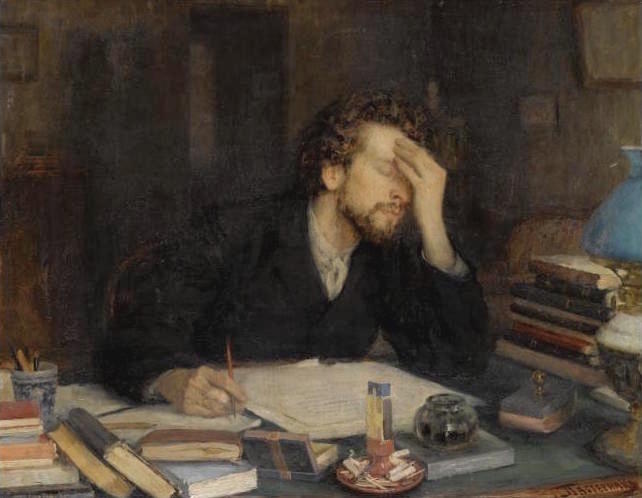
writerWhen you tell people you’re a writer there are some questions that almost always get asked. The most annoying is ‘do you have a publisher?’, not because of the question in of itself but the reaction to anyone who says no. That ‘ohh’ with declining intonation and the subsequent changing of topic is well-known code for ‘so you’re not really a writer then?’ Musicians don’t get this reaction when they say they’re not signed to a major record label yet.
In any case, I digress. When people choose not to be annoying, there are two questions that are more common than all others. Number one is ‘where do you get your ideas from?’. After that, the favourite interrogative is, and this one usually comes from the genuinely interested, ‘how many words do you write in a day?’.

I’ve had this discussion with other writers and read some things on the topic and I have to say I find a lot of it very curious. You see things like Somerset Maughan supposedly saying he wrote 600 words a day without fail. I find that somewhat implausible but it may have worked for him, I can’t say.

Now I’m not claiming to be a writing God or some such but I can fairly say that I’m well versed in putting words on a page. In one series of books, I worked out I’ve already written over a million words, so whatever other failings I may have, prolificity isn’t one of them. All the same, when writer friends of mine ask me how much I aim to write in a day I feel that it is in part the wrong way of looking at it.

I understand the need for a metric. We want definitive proof of progress and a word count provides that. Over a longer period of time, I too set myself word count targets as a way of making myself really get down to the discipline of putting in the hours. Likewise, word counts can give you a fair estimation of how far into a novel you are or even at what point you should finish it. Word counts can be useful; just not on a daily scale.

Why do I think this? For one, not all words are equal. Which words are easy and which are difficult may vary from writer to writer. Personally, I find dialogue reasonably easy to write. Therefore on a day when I’m writing dialogue I can probably get a high word count without much trouble. Other things take more work. Action scenes can be exhausting to write and often you can spend a lot of time on choreography to see if what you’re writing is actually physically possible or plausible. As a result, word flow can be choked.

typewriterEqually, some chapters are more difficult than others. I get chapter block far more often than full-on writer’s block. I can always write something just not always where I need to write it. Those 300 words you bled to get out may be the ones that bring a breakthrough and get you to a part of the story where the flow becomes much easier again. They are the chiselling that produces cracks in the wall of inertia.
By the same token, not all days are equal and this is where arbitrary daily goals become most absurd. If I wrote 1,000 words a day, every day without fail that would mean there would be many days where I have to stop mid-flow and many where I have to exclude all other life just to get them done. Neither makes sense. Writers have to be human beings too.

I understand that daily goals are about discipline. I just think that there are better ways to employ that discipline. If word count is your sole measure of productivity what do you make of those days where you get a lot of research done? What about the days where you write a ton of notes and plan out chapters to come? Both of these can be the platform that launches you into another cycle of creative outpouring but they may very well be days where you increase the word count of your current chapter by a sum of zero.

None of this is to say that judging yourself by word count is without merit. Just as the person who has made the choice to eat less and do more exercise may well find their weight goes down, so too is there a correlation between word count and overall success. By the same token, weight loss is only one way of looking at progress and in of itself might not be that meaningful, so on an individual day it might be with your word count.

What then can you use to apply discipline to yourself if you accept that word counts might not be the thing? Where I think the aim of a daily word count is going right is that it recognises that writing a novel is a labour that you have to stick at and put into most days, certainly all the days you can. Instead of focussing on the number alone, it is equally useful to think about how much time you are putting in. Likewise, effort is harder to quantify but you know when you’ve expended it. Any day where you’ve dedicated yourself with all your energy to making what you’ve written better than it was yesterday is a day you’ve been a real writer.

In the end, the way to be a writer is by writing things. It can be a slog, it can be isolating and can often feel fruitless but if you persist you’ll get to the end of the story. How you get there each day is a matter of what works best for you.

Long-term, word count matters. Generally, if I’m working full-time on a novel I do average about 1,000 words a day, on average being the important point.That average will include crazy days of 9,000 words done and painful days of a few hundred. It will also include days where I went for a walk or watched TV instead.

It’s right to treat writing as a job but what kind of job never gives you days off? Of course, there is a flip side to this: few jobs give you more than two days off a week. So if you’re a writer and this is your third day on a break, stop worrying about the word count and get back to work.

writing field.jpg