It’s all about the antagonists

Here’s a quick question for you; who is the most important character in the Harry Potter series? The answer is obvious, right? It’s the Harry Potter series; every book is called Harry Potter and the…It has to be Harry, surely? I would argue not: it’s Voldemort. That’s not to say Harry is some dull empty vessel who’s only purpose is to be he reader’s eyes into the world. On the contrary, Harry is a great character. He’s far from being a Luke Skywalker, true blue hero who is less interesting than the folk around him. Harry is wounded and sympathetic and occasionally flawed (although I’m not sure you’d get all this by just watching the films). Harry has many qualities but he is not the main mover of the narrative: that is Voldemort.
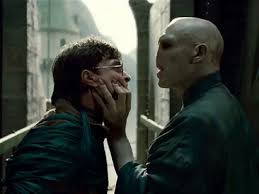
voldyThink about it. The book begins with the apparent first defeat of Voldemort. Harry is only famous because of the fame Voldemort bestowed on him by being unable to murder him. Likewise, the Harry potter series finishes with the final defeat of Voldemort. His absence is what tells us it is all over. Harry has a life after this but the series doesn’t continue to follow him in his life without Voldemort. Sure, there may be Cursed Childs and whatnots to come but they are addenda to the story of how Voldemort was defeated.

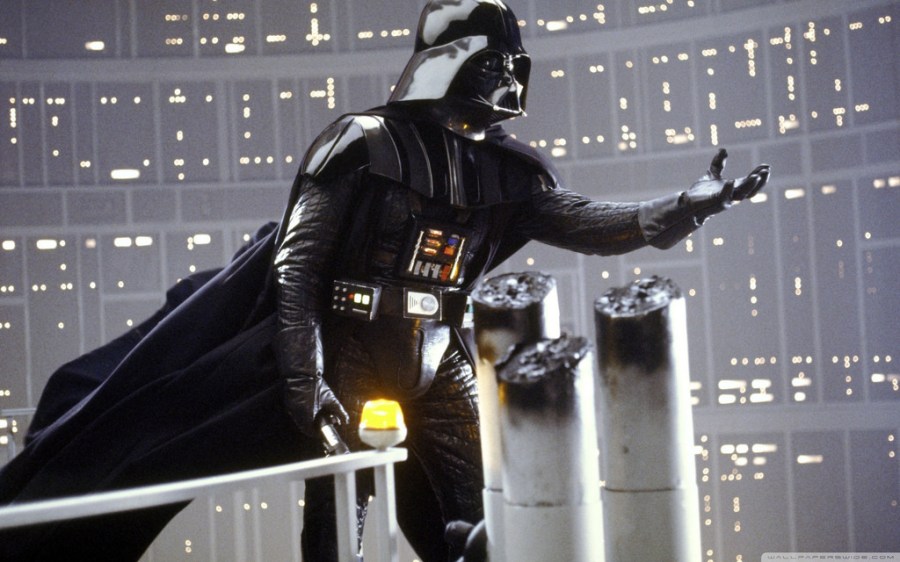
Speaking of Luke Skywalker. How interested are we in his life when there is no big bad around? The main story finishes with the death of Darth Vader. We don’t rejoin him until the reboots have another antagonist to throw at us. Likewise, it’s no surprise that we leave Middle Earth with the demise of Sauron.

I’ve been thinking about antagonists recently while reviewing the Defenders’ respective series. The broad consensus seems to be in terms of quality they go; Jessica Jones, Daredevil and then, someway behind, Luke Cage. Is it just merely a coincidence that while Jessica had David Tennant’s brilliance as Kilgrave and Daredevil had the grinding fury of Vincent D’Onofrio’s Kingpin, Luke Cage had to contend with the short-lived and nonthreatening Cottonmouth and then the silliness of Diamondback?

I’m only halfway through Iron First but the major problem so far seems to be the lack of a good antagonist. All of which makes me think, maybe it’s all about the antagonist after all. At least when it comes to sci-fi and fantasy. Other genres have other considerations. Detective novels while benefiting from good antagonists are more about the protagonist.So what is it about sci-fi and fantasy that make antagonists so important? Partly, it is that a lot of sci-fi and fantasy is about conflict against an exceptional threat. If the threat is not sufficiently threatening then defeating it is less compelling.

Another reason is sci-fi and fantasy is often (though not always) less morally ambiguous. In a fight between good and evil the only way the evil is going to be defeated is through terminal justice. There will be no accommodation or settlement. The bastard needs to die and we need (for the most part) to be ok with the bastard dying. Therefore, their death must be both utterly necessary and morally and narratively satisfying.

joffYou might argue that some fantasy is not so black and white, A Song of Ice and Fire, for example. While there may be some truth in this, the series does also provide us with some genuine hate figures for whom we will endure all kinds of suffering to our heroes just to see them get what is coming, like Joffrey and Ramsay. Equally, the Ice and Fire overarching it all pretty unambiguous. Those white walkers/Others have to be defeated.

Ah, that’s fantasy but sci-fi is different, you might argue. Sometimes there is an accommodation in sci-fi, like in the Matrix and Mass Effect. In the case of the Matrix films, they clearly cottoned on to the fact that we were more interested in an antagonist battle so they made it more about the recognisable Smith than the amorphous Matrix itself. While Mass Effect 3 has one of the worst endings ever, so let that be a lesson about deviation from the template.

Other examples? Look at Star Trek. What are considered to be the best Star Trek films? Generally, people say Wrath of Khan, Undiscovered Country and First Contact. For which we have Ricardo Molteban’s Khaaaaaaaan, Christopher Plummer’s Shakespeare quoting Klingon and, arguably the greatest Star Trek villain of all, the Borg.

For that matter, look at the series. What turned around DS9? The introduction of proper antagonists in the form of the Dominion. What was often the difference between a good Babylon 5 episode and a cringe-worthy one? Did it have the Shadows in it? In the same vein, I never really had much interest in Star Gate but I bothered with Stargate: Atlantis because the creepy Wraiths seemed like a genuine threat. Oh and lest we forget, what’s the surefire way to up the stakes in any series of Dr Who?I give you everyone’s favourite demented space nazis wailing EXTERMINATE!

It’s a lesson to all of us when we write. While we all want to give the world the next brooding hero who will show us complexity, humour and virtuoso fighting skills so far uncontemplated, make sure there’s someone out there for them who is capable of killing them and and shaping the narrative of the world they wish to terrorise. As much as heroes, villains have a challenge to answer. Let us hope they rise to the occasion.

loki


The Sinister Conspiracy: Left-handedness in fiction.

A few weeks ago the internet announced it was left-hander’s day and, predictably, people came out with articles about how difficult it was being left-handed ‘Boo, scissors are wrong’ etc. There was very little about how left-handers are depicted (and not depicted) in fiction, which is a personal bugbear of mine. In a curious way, being left-handed gives you a glimpse into what being a minority is like and what being disabled is like. This is both trivial and non-trivial.

It is trivial in that being in the left-handed minority isn’t going to get you killed or arrested or treated to abuse or violence from strangers as is the case for many minorities in many parts of the world (although it wasn’t so long ago it lead to beatings in the British school system). Likewise, contrary to those articles being left-handed in a right-handed world is not a major adjustment – we do possess right hands as well and are often quite adept with them.

Where it is non-trivial is it gives a flavour of how the world reacts to difference and diversity. For many writers at the moment this is a big topic and writers of fantasy are by no means exempt from these concerns. The way difference is treated in fiction usually falls into three forms; representation, tokenism and diversity. Thus through the lens of left-handedness and the minor insights it gives, I shall attempt to approach the topic as a whole.


barack_obama_signs_emergency_declaration_for_arkansas_1-28-09Representation

At times, I’ve been sceptical about the notion of the need for representation. What is this narcissistic need readers and viewers are deemed to have that they need to see themselves in everything? American film producers are often the prime culprits of this and, I think, underestimate their audiences in doing so. They wanted to make Harry Potter American in the films. Fortunately, JK Rowling vetoed that and lo and behold American audiences still were able to enjoy it.

Similarly, I watch a lot of American TV and films and don’t spend the whole time waiting for a British person to turn up. When I read ‘The Famished Road’ I didn’t scour through the novel hoping that a white person would appear. I expect the people who populate a particular story to be consistent with that setting and don’t need to see ‘myself'(myself being someone who shares some identity position).

There’s an easy rejoinder to this point of view, however. That’s ok for you to say when you’re in the majority and have any number of representatives in fiction. There’s a measure of truth in that which only comes into focus when you’re not in the majority. Here’s where I return to left handers.

How many left-handed heroes are there in fantasy? Off the top of my head, Tolkien has one, Maedhros, who after having his right hand removed goes on to be better with a sword in his left hand. George RR Martin does a similar thing with Jaime Lannister only he is awful with his left hand. In fairness to Martin, I believe Ayra is mentioned as being left-handed making her the only example I can easily recall. I haven’t read the majority of fantasy fiction novels ever written so it is possible there are many others but I think my sample is large enough to be indicative.

Why so few? Here comes the explanation that is most often given for the absence of diversity – realism or, more properly, verisimilitude. Lets now create our fantasy world. I’m not going to say what is right and wrong for writers here (with one exception), rather pose the questions. And yes, left-handedness can obviously be substituted for other things.

First question? Is left-handedness as common in your fantasy world as ours? If it is then something like one in ten of your characters should be naturally lefty. Are they wielding their weapon left-handed? If not, why not? In many historical cultures there had been prejudice against left-handedness and lefties were forced to do things right-handed. The Romans were possibly the worst offenders for this. Putting aside the general cultural aspect of this intolerance for a moment, what function does this prejudice have? The Romans were keen on close formation fighting and had square shields for much of their Empire. Holding a spear left-handed and shield on the right arm would create a weak point in the line exposing the man on the left and shielding the shield of the man on the right. Getting rid of the lefty seems like a sensible course in this context.

Is this the only solution? Some hoplite shields from a similar time in history were notched on either side so the spear could be thrust through left or right-handed. Another option would be to put the lefty on the end of line (or block if fighting in squares). Does your culture care enough about the exceptions to make these adjustments?

If, on the other hand, your fantasy culture doesn’t fight in close formation like the Romans, for example forest skirmishers, the imperative for everyone to fight from the same direction disappears. In general, in a world where the majority fight right-handed, being left-handed is an advantage. Therefore, if it doesn’t undermine a formation, it would disadvantageous to force your fighters to suppress their natural preference. You may still wish to insist on this but then you need to bring in issues of intolerance rather than practicality to explain it.

I suspect lack of representation of left-handedness in fantasy broadly stems from two sources. One, the writer is themselves right-handed and has never given it any thought and two, their fantasy cultures are largely reminiscent of historical Earth cultures and transplant their attitudes to left-handedness into the bargain. There’s nothing inherently wrong with this latter position but would it hurt to put in an occasional reference such as the character having a stronger shield hand than normal? Just as a note, if you do decide to make that reference don’t make it that the character is a liability or cack-handed. We get enough of that crap already (and it’s almost always untrue).

Tokenism

Tokenism is different from issues of representation in that in this example the writer/screenwriter has made an effort to include or make reference to the minority but has done so in a way that is shallow or unhelpful. If there’s one thing worse than being represented it’s being represented in a way that negatively stereotypes. Frankly, I’d rather there weren’t any more British characters on American TV than have another effete aristocrat speaking like they’ve walked out of the 1920s show up. Or football hooligans either. There are plenty (I dare say the overwhelming majority) of British people who are neither of these things.

Left-handers fare no better. When do we get a mention? In crime stories, of course. Left-handedness is used as a gimmick to help catch the killer, the killer almost always being left-handed in these cases. Dammit, my sinister plan ruined by my sinister hand. The only other example I can bring to mind is an episode of CSI where Grissom concludes that the victim’s work space has been interfered with because the mouse was on the right hand side. The episode then goes on to helpfully inform us of the many left-handed Amercians who die every year using equipment the wrong way round. Sorry, Grissom and your great detective skills but I don’t know any left-handed people who have the mouse on the left-hand side (see earlier point about being able to use our right hands). Another classic is which wrist the watch was on not matching handedness. It doesn’t? Maybe that’s because people don’t always follow that rule.

The problem with tokenism is that is rarely has a function beyond merely acknowledging the existence of a group. Little to no attempt is made to integrate that aspect of the person in a wider character or even to suggest they have a character beyond that particular aspect. In the case of lefties we are boiled down to murderers and being unable to adapt to a right-handed world, which ironically is actually something we’re generally pretty good at (the functioning not the murder although I’m sure we’d do a great job of that too if we put our lateral-thinking minds to it).

final_challenge_international_de_paris_2013-01-26_193155Diversity

How do you represent and get beyond tokenism? I think the major pointer here is about your motivation for including difference in your story. If you are including difference because you feel you ought to and it will make someone happy then it’s probably going to be a struggle to pass through tokenism because in essence that’s what you’re doing.

The most compelling reason I can think of to include difference and diversity in a story is that it is simply a better story and richer world for doing so. We don’t want to travel to a place that is the same as the one we left. We don’t want every new person to look and think exactly the same as the ones we already know. We wouldn’t survive as a species if everyone was attracted to one type of person.

In the case of left-handers, I think this works on an aesthetic and interest level. In sports, I always like the look of seeing a left-handed tennis player against a right-handed one or the field and tactics in cricket having to be readjusted for the left-handed batsman coming in. This can easily be transposed into fiction; the challenges of facing a left-hander in a duel or the particular advantage for a lefty fighting up a spiral staircase.

Left-handedness, like any difference, brings a new set of challenges and story-telling opportunities. As writers these are gifts that we should relish. Instead of contemplating how to bring diversity into our stories we should use diversity as a starting point and be grateful for the layers of complexity it provides.


What kind of wizard are you? – A Quiz.

Ever wondered what kind of wizard you would be? No, we not talking sorting hats here, we’re talking about how your personality and power would come together. In the Book of Water (Enchantress Trilogy) by our author JW Whitmarsh there are four different kinds of wizard; enchanters, illusionists, seers and druids. Each have distinct approaches and perspectives but, ultimately, it is the person inside who shapes how the wizard comes to their power.

After a quick word from the author find out where you would sit

Nexus-Fiction: We’re trying to decide what kind of wizard people would be if they were born gifted in the world of the Elemental Cycle. Maybe we should start with some famous examples.

JW Whitmarsh: OK, but bear in mind this would mean they would have to be limited by the lore of my world. You can’t really dump a character from another world into a distinct fictional construct cohesively.

NX: Indulge us.

JW: Very well.

NX: Right. Let’s start with a biggie. Gandalf?

JW: Difficult. I think you’d have to treat Gandalf the Grey and Gandalf the White differently. Gandalf the Grey seems to have an affinity with fire magic principally, which says enchanter, but he also does defensive wards and shields in the manner of a seer. I’m going to say seer with exceptional skills in elemental charms. Gandalf the White on the other hand is all about light magic and in the Elemental Cycle world he’d probably be a summoner like Loreliath, but that’s not an option in this test.

NX: Alright, Merlin?

JW: The recent TV Merlin on BBC seemed to be a seer mostly but if we’re talking about the Merlin of legend he would definitely be an illusionist.

NX: Prospero?

JW: He is quite controlling and gets others to do his bidding a lot so I’d say he’d be an enchanter.

NX: Who’d be a druid?

JW: Radagast the Brown would fit very comfortably into the druid role, I think. Or Herne the hunter.

There you have it. Now it’s your turn to decide what you would be.

Question 1: If you had to face one of the following, which would you LEAST want?

  1. Going blind
  2. Losing both hands.
  3. Losing sense of taste and smell
  4. Going deaf

Question 2: It’s raining hard outside and you want to pass the time. Pick the game that would amuse you best.

  1. Poker
  2. Chess
  3. Blackjack
  4. Dominoes

Question 3: Your bedroom is drab and spartan. You can cheer it up with one thing, which would you choose?

  1. A teddy bear
  2. A plant
  3. A ceiling painting of the stars
  4. An encyclopaedia

Question 4: You have to go onstage and entertain a crowd for a short time. What is your act?

  1. A Stand-up routine
  2. Juggling
  3. Magic tricks
  4. A poetry recital

Question 5: Which danger sign would most likely adorn your workshop.

  1. 1024px-Flammable-symbol.svg 2. electricity 3. 2000px-WHMIS_Class_D-1.svg.png4. 2000px-Danger_radiation.svg

Question 6: You’re worried about security for your home, which do you invest in?

  1. A state-of-the-art alarm system
  2. Beefing up the neighbourhood watch
  3. A guard dog
  4. Hidden traps

Question 7: Which of the following phobias bothers you LEAST

  1. Crowded places
  2. Spiders
  3. Heights
  4. Snakes

Question 8: You’ve got some time to relax, what do you want to do?

  1. Take a walk in the park
  2. Visit an art gallery
  3. Listen to classical music
  4. Have a massage

Question 9: You have to commit a bank robbery and want to use as little violence as possible, how would you go about it?

  1. Fill the bank with smoke and set off the fire alarm to get all the employees out first.
  2. Hack the security cameras so you can pass by unseen.
  3. Convince the bank manager that you have his family hostage
  4. Pump a sedative into the air conditioning to send everyone to sleep

Question 10: You are in fear for your life, how will you protect yourself?

  1. Find a vantage point from where you can see anyone approaching.
  2. Escape to deep within the forest
  3. Surround yourself with the best guards you can find
  4. Retreat into a cave network that you know intimately

Answer Time.

Add up the following scores for each question. Pens and pencils ready.

1: 1)d  2)b  3)a  4)c        2: 1)d  2)c  3)b  4)a    

3: 1)b  2)a  3)d   4)c       4: 1)b  2)c  3)d  4)a

5: 1)b  2)c  3)d  4)a       6: 1)c  2)b  3)a  4)d

7: 1)b  2)d  3)c  4)a       8: 1)a  2)d  3)c  4)b

9: 1)d  2)c  3)b  4)a        10: 1)c  2)a  3)b  4)a

Mostly As Click Here     Mostly Bs Click Here    Mostly Cs  Click Here     Mostly Ds Click Here