
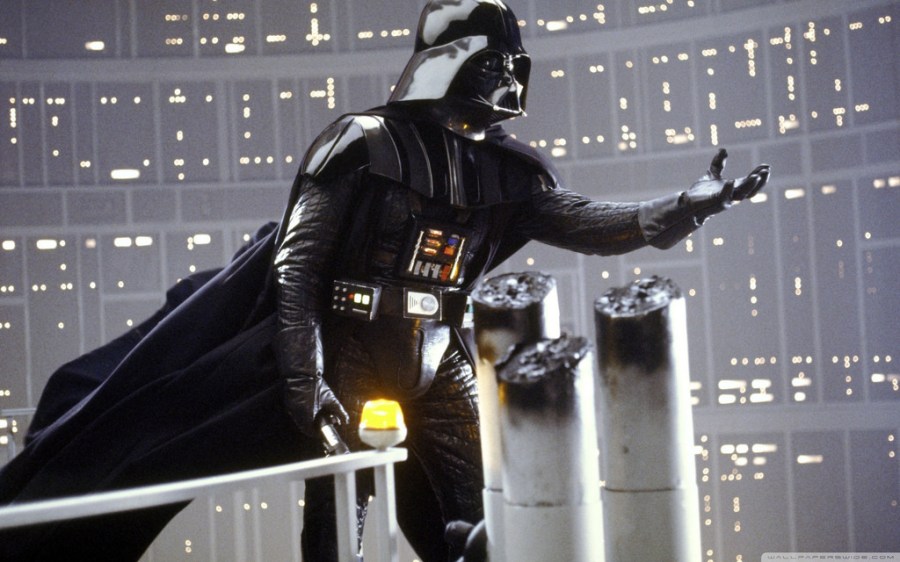
Here’s a quick question for you; who is the most important character in the Harry Potter series? The answer is obvious, right? It’s the Harry Potter series; every book is called Harry Potter and the…It has to be Harry, surely? I would argue not: it’s Voldemort. That’s not to say Harry is some dull empty vessel who’s only purpose is to be he reader’s eyes into the world. On the contrary, Harry is a great character. He’s far from being a Luke Skywalker, true blue hero who is less interesting than the folk around him. Harry is wounded and sympathetic and occasionally flawed (although I’m not sure you’d get all this by just watching the films). Harry has many qualities but he is not the main mover of the narrative: that is Voldemort.
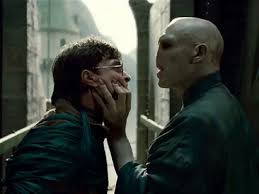 Think about it. The book begins with the apparent first defeat of Voldemort. Harry is only famous because of the fame Voldemort bestowed on him by being unable to murder him. Likewise, the Harry potter series finishes with the final defeat of Voldemort. His absence is what tells us it is all over. Harry has a life after this but the series doesn’t continue to follow him in his life without Voldemort. Sure, there may be Cursed Childs and whatnots to come but they are addenda to the story of how Voldemort was defeated.
Speaking of Luke Skywalker. How interested are we in his life when there is no big bad around? The main story finishes with the death of Darth Vader. We don’t rejoin him until the reboots have another antagonist to throw at us. Likewise, it’s no surprise that we leave Middle Earth with the demise of Sauron.
I’ve been thinking about antagonists recently while reviewing the Defenders’ respective series. The broad consensus seems to be in terms of quality they go; Jessica Jones, Daredevil and then, someway behind, Luke Cage. Is it just merely a coincidence that while Jessica had David Tennant’s brilliance as Kilgrave and Daredevil had the grinding fury of Vincent D’Onofrio’s Kingpin, Luke Cage had to contend with the short-lived and nonthreatening Cottonmouth and then the silliness of Diamondback?
I’m only halfway through Iron First but the major problem so far seems to be the lack of a good antagonist. All of which makes me think, maybe it’s all about the antagonist after all. At least when it comes to sci-fi and fantasy. Other genres have other considerations. Detective novels while benefiting from good antagonists are more about the protagonist.So what is it about sci-fi and fantasy that make antagonists so important? Partly, it is that a lot of sci-fi and fantasy is about conflict against an exceptional threat. If the threat is not sufficiently threatening then defeating it is less compelling.
Another reason is sci-fi and fantasy is often (though not always) less morally ambiguous. In a fight between good and evil the only way the evil is going to be defeated is through terminal justice. There will be no accommodation or settlement. The bastard needs to die and we need (for the most part) to be ok with the bastard dying. Therefore, their death must be both utterly necessary and morally and narratively satisfying.
 You might argue that some fantasy is not so black and white, A Song of Ice and Fire, for example. While there may be some truth in this, the series does also provide us with some genuine hate figures for whom we will endure all kinds of suffering to our heroes just to see them get what is coming, like Joffrey and Ramsay. Equally, the Ice and Fire overarching it all pretty unambiguous. Those white walkers/Others have to be defeated.
Ah, that’s fantasy but sci-fi is different, you might argue. Sometimes there is an accommodation in sci-fi, like in the Matrix and Mass Effect. In the case of the Matrix films, they clearly cottoned on to the fact that we were more interested in an antagonist battle so they made it more about the recognisable Smith than the amorphous Matrix itself. While Mass Effect 3 has one of the worst endings ever, so let that be a lesson about deviation from the template.
Other examples? Look at Star Trek. What are considered to be the best Star Trek films? Generally, people say Wrath of Khan, Undiscovered Country and First Contact. For which we have Ricardo Molteban’s Khaaaaaaaan, Christopher Plummer’s Shakespeare quoting Klingon and, arguably the greatest Star Trek villain of all, the Borg.
For that matter, look at the series. What turned around DS9? The introduction of proper antagonists in the form of the Dominion. What was often the difference between a good Babylon 5 episode and a cringe-worthy one? Did it have the Shadows in it? In the same vein, I never really had much interest in Star Gate but I bothered with Stargate: Atlantis because the creepy Wraiths seemed like a genuine threat. Oh and lest we forget, what’s the surefire way to up the stakes in any series of Dr Who?I give you everyone’s favourite demented space nazis wailing EXTERMINATE!
It’s a lesson to all of us when we write. While we all want to give the world the next brooding hero who will show us complexity, humour and virtuoso fighting skills so far uncontemplated, make sure there’s someone out there for them who is capable of killing them and and shaping the narrative of the world they wish to terrorise. As much as heroes, villains have a challenge to answer. Let us hope they rise to the occasion.

 Nexus-Fiction